

How Corrosion Resistance Impacts Automotive Clamp Performance Over a Vehicle's Lifetime
November 24.2026
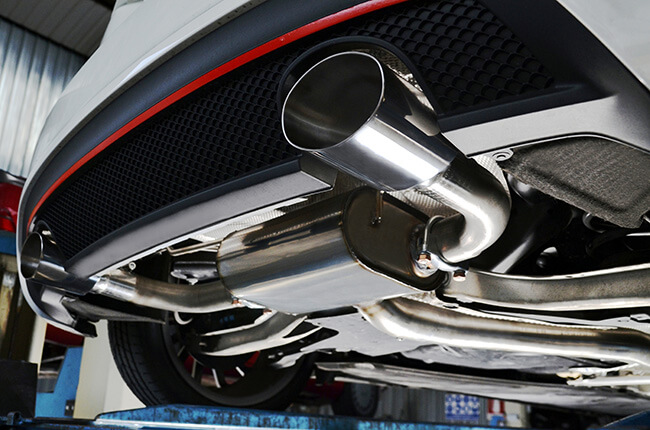
The Long-Term Risks of Corrosion in Automotive Clamping Systems
An automotive clamp can pass every inspection on the assembly line and still cause a fastening failure years later. Long-term exposure to corrosive conditions can weaken a connection that performed as intended during assembly.
Throughout a vehicle’s service life, fastening components face road salt, moisture, chemical exposure, vibration and repeated temperature changes. An exhaust band clamp that initially holds a secure connection may gradually lose its ability to maintain that connection. A corroded heat shield fastener can contribute to an unwanted rattle. A compromised CV boot clamp can allow grease to escape or contaminants to enter a critical joint.
Because corrosion develops over time, its effects can be difficult to detect during initial production testing. A fastener that deteriorates in service may eventually require costly repairs, contribute to warranty claims or affect a supplier’s quality record.
Automotive engineers and sourcing teams can reduce these risks by accounting for corrosion exposure when selecting clamp materials, designs and installation methods.
Why Corrosion Resistance Matters for Long-Term Clamp Performance
Clamps perform a straightforward but essential job: maintaining secure attachment or compression as the surrounding assembly experiences changing loads and environmental conditions.
Corrosion can interfere with that job in several ways. Depending on the material and exposure conditions, it can cause surface deterioration, localized pitting or damage to the band and locking mechanism. Over time, this deterioration can reduce the fastener’s ability to maintain its intended holding force.
In a vehicle, corrosion can also compound the effects of other operating stresses. Automotive fasteners must often withstand several conditions at once:
- Road salt and moisture: De-icing chemicals and repeated wet-dry cycles create conditions that can accelerate corrosion, particularly in underbody and wheel-end assemblies.
- Temperature fluctuations: Heating and cooling cause components to expand and contract, placing additional demands on the fastening system.
- Vibration and mechanical loads: Continuous movement can worsen the effects of a weakened clamp or an improperly secured connection.
- Chemical exposure: Automotive fluids, exhaust condensates and other contaminants introduce additional material compatibility considerations.
A clamp that performs well in one of these conditions may not perform equally well when several occur together.
Engineers must therefore evaluate corrosion resistance alongside mechanical strength, the ability to withstand operating temperatures and installation requirements. Selecting a fastener based only on its initial holding strength or unit cost can overlook the conditions that determine whether it will continue performing years into service.
BAND-IT’s automotive fastening solutions address applications where clamp design, material selection and installation methods must work together under demanding conditions.
How Corrosion Affects Clamps Across Automotive Applications
The consequences of corrosion vary depending on where a clamp is installed and what it secures. Understanding those differences helps engineers identify the material properties and fastening characteristics that matter most.
Exhaust Band Clamps: Maintaining Connections Through Heat and Corrosion
Exhaust assemblies operate in one of the vehicle’s most demanding environments. An exhaust band clamp may be exposed to elevated temperatures, thermal expansion and contraction, road spray and corrosive contaminants throughout its service life.
An exhaust band clamp must maintain a secure connection through repeated heating and cooling while resisting corrosion of the band and locking mechanism.
If corrosion weakens the fastening system or the connection loses retention, the result may be exhaust leakage, unwanted noise or additional stress on nearby components.
To maintain a secure exhaust connection over time, engineers should evaluate several factors when selecting an exhaust band clamp:
- Material performance at the application’s operating temperatures
- Resistance to moisture, road salt and corrosive exhaust condensates and other contaminants
- Ability to maintain the required connection under thermal cycling and vibration
- Clamp geometry, installation access and tooling requirements that help achieve repeatable fastening results
Corrosion-resistant stainless steel fastening solutions can provide advantages in demanding exhaust environments, but the appropriate alloy and clamp design depend on the specific application.
BAND-IT offers banding systems and application-specific fastening expertise to help manufacturers evaluate materials and attachment methods for demanding installations.
Exhaust Heat Shield Clamps: Keeping Protective Components Secure
Exhaust heat shields protect nearby vehicle components from excessive heat. Their fastening systems must hold them in place despite road vibration, temperature fluctuations and exposure to moisture and debris.
A corroded or loose exhaust heat shield clamp can allow the shield to rattle or shift out of position, potentially requiring service to restore secure attachment.
Depending on the application, stainless steel banding or ties can provide a low-profile attachment method without requiring a welded connection at every fastening point.
BAND-IT® Tie-Lok® stainless steel ties and Dual-Lokt® clamps are among the engineered fastening solutions used in automotive applications where compact geometry and secure retention are important.
Engineers specifying heat shield attachments should consider how the clamp material, mounting arrangement and installation method will perform together under repeated thermal cycling and road exposure.
Battery Cable Clamps and Automotive Cable Ties: Protecting Cable Routing
Cable management presents a different set of fastening challenges.
In both internal combustion and electric vehicles, cable assemblies may run through areas exposed to moisture, vibration, temperature changes and automotive chemicals. The fastening system must keep those cables properly routed without damaging insulation or allowing excessive movement.
For engineers evaluating a battery cable clamp or other cable restraint solution, the first distinction is between an electrical terminal connection and a mechanical cable management fastener. Each performs a different function and has different design requirements.
Material selection depends on the specific fastening application and the conditions components encounter. Conventional plastic automotive cable ties are commonly used for cable management, while T-bolt clamps and pinch ear clamps serve other fastening needs throughout the vehicle. Each solution must be evaluated based on factors such as temperature, chemical exposure, corrosion resistance and required service life.
Stainless steel automotive cable ties offer another option where higher strength or corrosion resistance is needed. Their selection should also account for cable jacket protection, edge geometry, clearance and compatibility with surrounding materials.
Electric vehicles introduce additional cable routing demands, particularly around battery packs and other tightly packaged assemblies. In these locations, fasteners must maintain cable positioning without interfering with adjacent components or damaging cable insulation.
BAND-IT’s product applications provide additional examples of how engineered fastening solutions can address cable management and other attachment requirements.
CV Boot Clamps: Preserving the Seal in Exposed Wheel-End Environments
Wheel-end components face frequent exposure to road spray, de-icing chemicals and debris.
A CV boot clamp helps secure the protective boot around a constant velocity joint, retaining lubricant while helping keep water, dirt and road debris out of the assembly.
That makes clamp integrity essential. If the fastening system deteriorates or loses the required compression, the boot seal may be compromised. Grease loss or contaminant ingress can then accelerate wear within the joint.
Corrosion resistance is particularly important because CV boot clamps must perform while exposed to road splash, de-icing chemicals, vibration and movement associated with suspension and drivetrain operation.
Material selection must be considered alongside the clamp’s contact with the boot, the distribution of compression around the seal and its ability to maintain the required clamping force during operation.
Choosing the Right Corrosion-Resistant Clamp Material
Stainless steel is widely used in demanding fastening applications because it offers a useful combination of corrosion resistance, strength and formability.
The appropriate stainless steel grade depends on the expected exposure conditions, the required mechanical performance and the cost of the fastening solution. For example, a clamp exposed to frequent road salt may need greater resistance to chloride-related corrosion than one installed in a more protected location.
Common material options include:
- 201 stainless steel: Offers high strength and resistance to oxidation and many moderate corrosive agents. It can be a practical choice where the environmental demands and cost requirements align with its properties.
- 304 stainless steel: Provides strong general-purpose corrosion resistance, including performance in fresh water and many industrial atmospheres.
- 316 stainless steel: Offers improved resistance to chloride-related corrosion compared with 304, making it worth evaluating for more demanding salt and moisture exposure.
- Specialty alloys: May be appropriate when the application involves more aggressive chemicals or environmental conditions beyond the capabilities of standard stainless steel grades.
Along with corrosion resistance, engineers should assess the material’s strength at operating temperatures, forming characteristics and compatibility with adjacent components. The selected alloy must also work with the clamp geometry and installation process.
The goal is to select a material that meets the application’s corrosion, temperature and mechanical requirements without adding unnecessary cost.
For additional material guidance, consult BAND-IT’s Product Solutions Guide or contact our technical team to discuss the stainless steel grades available for a specific fastening application.
Why Corrosion Resistance Should Be Considered Early in Automotive Design
Discovering that a clamp can’t meet corrosion or retention requirements late in development can force changes to the surrounding assembly.
A different material, band width or locking design can affect packaging space, installation access, tooling requirements and assembly procedures. Those changes may require additional testing and complicate sourcing decisions.
Addressing corrosion resistance earlier gives engineering teams more flexibility.
During initial design, engineers and sourcing teams can establish the clamp’s performance requirements before selecting the material, clamp design and installation method. That process should answer several practical questions:
- Operating environment: What combinations of salt, moisture, chemicals, heat and vibration will the assembly experience?
- Material and geometry: Which alloy, band dimensions and locking features best match the application?
- Installation consistency: Can the specified tooling and process deliver repeatable results at production volumes?
- Validation requirements: How will corrosion exposure, thermal cycling and vibration be assessed against the assembly’s performance criteria?
- Lifecycle cost: What are the potential consequences of field failure compared with the initial cost of the fastening solution?
These considerations give application engineers a clearer basis for selecting and testing fasteners. They also help sourcing professionals compare suppliers based on performance requirements, production needs and potential warranty exposure.
A lower-cost clamp offers little advantage if its performance creates avoidable rework, maintenance or warranty exposure later in the vehicle’s life.
BAND-IT works with customers on custom fastening solutions when standard product configurations don’t fully address an application’s requirements. Early engineering discussions can help identify material, design and installation considerations before they become more expensive to change.
How Clamp Design and Installation Affect Long-Term Performance
Corrosion-resistant materials perform best when the clamp design and installation process meet the application’s requirements.
The band, locking mechanism and installation tool all contribute to the performance of the finished assembly. If the clamp is installed with insufficient tension, excessive force or inconsistent positioning, the connection may not perform as intended, regardless of its corrosion resistance.
Installation tooling plays an important role in controlling these variables, particularly in high-volume automotive production. The appropriate tool and fastening method can help operators apply clamps more consistently and reduce variation between assemblies.
BAND-IT offers fastening systems and installation tooling designed to help manufacturers achieve repeatable results. Its application engineers can help evaluate clamp geometry, tooling compatibility and installation procedures against specific production requirements.
This allows manufacturers to assess clamp performance from initial installation through expected service conditions, including corrosion exposure, vibration and thermal cycling.
Learn more about why manufacturers choose BAND-IT for engineered fastening solutions.
Engineer for Long-Term Automotive Reliability With BAND-IT
The best time to address corrosion-related clamp failures is during automotive design and development. Engineers can reduce the risk of premature deterioration by selecting materials for the expected environment, validating retention requirements and establishing repeatable installation procedures.
BAND-IT brings decades of fastening experience and application-specific engineering expertise to these decisions, helping automotive manufacturers develop solutions for demanding operating conditions.
Need to specify an exhaust band clamp or another automotive fastening solution for a corrosive environment? Connect with BAND-IT’s engineering team to discuss material options, application requirements and installation methods.