

Power cables in applications like data centers carry high fault currents. During a short circuit event, the electromagnetic forces between conductors can become extreme in a fraction of a second. Without proper restraint, cables can whip, collide and fail. This creates risk to equipment and the surrounding infrastructure.
Cable cleats are designed to control this risk. They hold cables in place during fault conditions and limit movement caused by short-circuit forces. When properly specified and installed, they protect both the cable system and the broader power network.
Cable Cleat Calculator
Legal Disclaimer
The product information and recommendations provided by this tool are based solely on data supplied by the user and are intended for general informational purposes only. Such information alone does not constitute engineering advice or a warranty of performance. The user is solely responsible for verifying all inputs and determining the suitability, compatibility, and proper application of any product for the intended use. Final specifications, design, and product selection must be reviewed and approved by qualified engineering personnel and should be confirmed with a BAND‑IT representative prior to purchase and installation. By using this tool, the user assumes all risk and responsibility associated with the selection and use of any product. BAND‑IT disclaims all liability for any loss or damage arising from the use of, or reliance upon, this tool or the information provided herein.
Cable Ladder Rungs
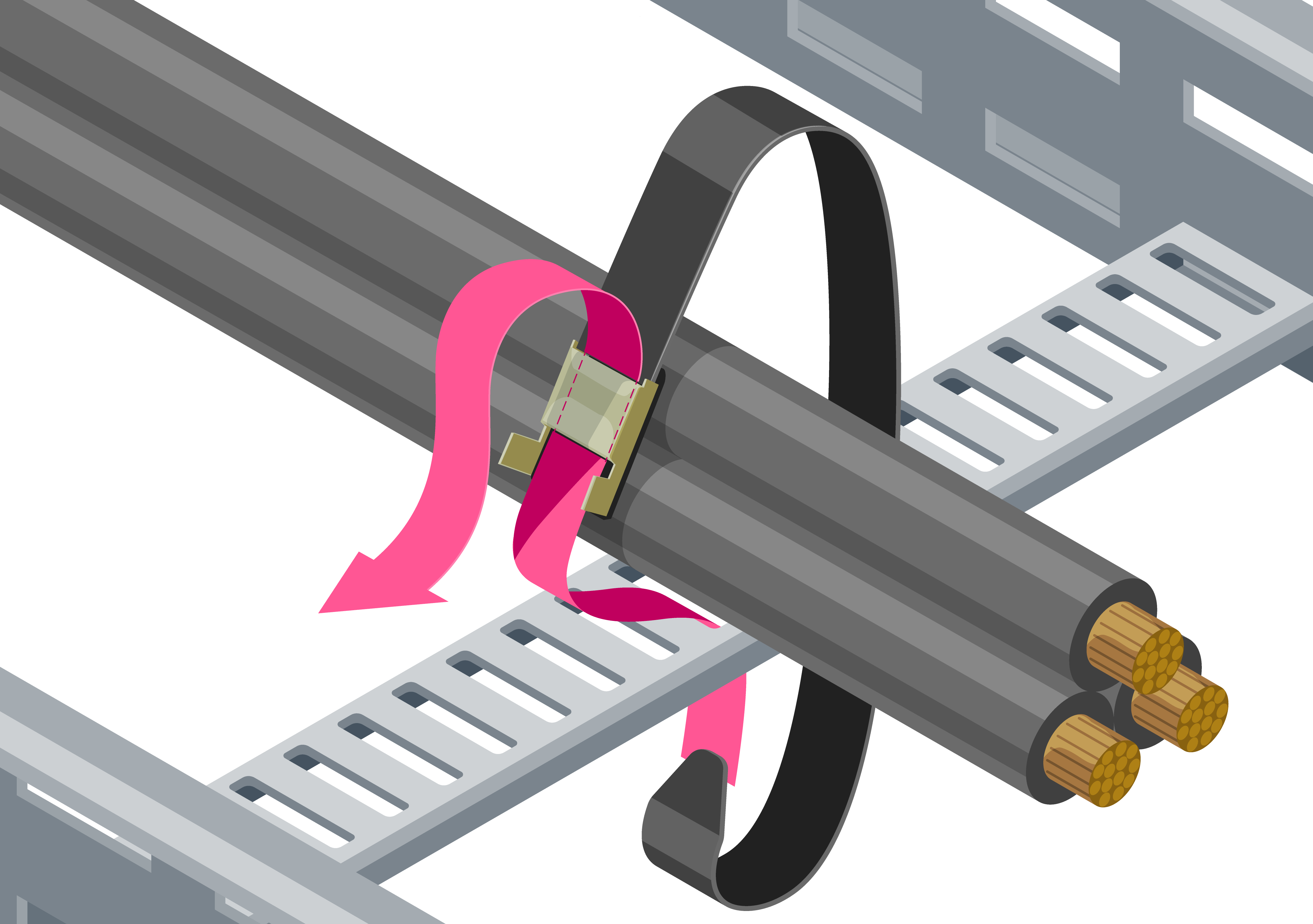
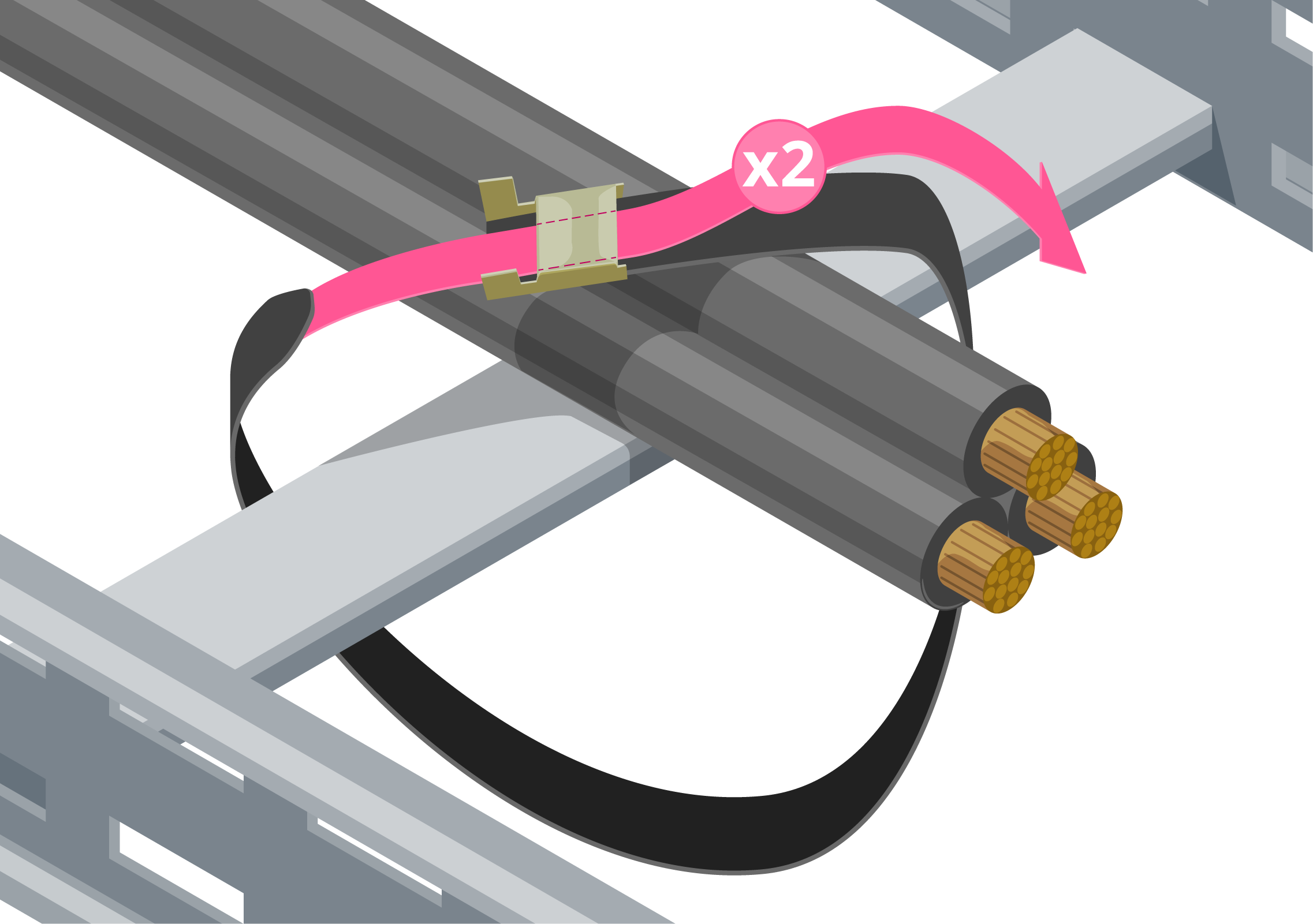
Measurement system
Cable Configuration



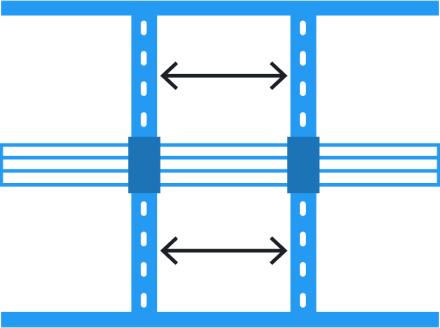
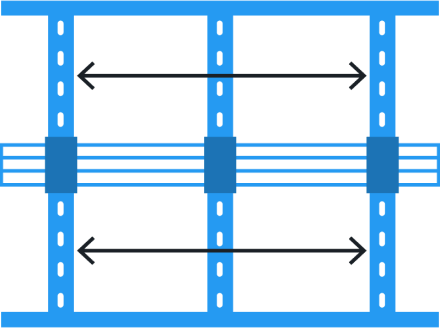
Rung Spacing
Max Cable Outside Diameter
Product Recommendation Results
Calculation Inputs
Cable Ladder Rung Type: —
Cable Configuration: —
Spacing: —
Peak kA Rating: —
Max Cable Outside Diameter: —
| Part Number | Description | kA Rating | Max Cable OD | Required Ladder Rung Slot Width (greater than or equal to) |
Spacing |
|---|
| Material | Band Width | Band Length | Package Qty | Cushion Sleeve Required | Test Report |
|---|
Need Further Information or Support? Contact BAND-IT:
BAND-IT’s cable cleat calculator guides engineers and contractors through selection. It connects key inputs such as cable configuration, kA rating, spacing and diameter to a recommended solution aligned with IEC 61914.
Use the calculator to determine the correct cable cleat solution based on your system requirements. The result is a recommended product along with a downloadable summary and a contact form for follow-up.
What Is a Cable Cleat?
A cable cleat is a mechanical device that restrains power cables during short‑circuit events. It secures the cable to a mounting structure (such as a ladder or tray) and limits movement caused by electromagnetic forces.
During a fault, current flow generates strong attraction or repulsion between conductors. Without restraint, this movement can lead to insulation damage, conductor deformation, or failure of terminations. Cable cleats are tested under IEC 61914 to verify their ability to withstand these forces and maintain cable position.
Cable cleats work as part of a complete cable restraint system, alongside trays, ladders, and mounting hardware.
Where Cable Cleats Are Used in a Data Center
Cable cleats are installed at points in the power distribution system where fault forces are highest and control is most critical. In data centers, this typically includes:
- Incoming utility and generator feeds
- UPS outputs and switchgear connections
- Main distribution panels
- Cable trays and ladder systems throughout the facility
Different areas place different demands on the restraint system. Overhead tray runs often require low‑profile cleats for dense routing. Ladder systems rely on cleats that transfer load effectively to the structure. Proper selection supports phase separation, airflow, and long‑term stability.
Cable Pulling Challenges with Traditional Cleat Systems
Cable pulling is a critical step in power cable installation. In data centers, long runs, tight trays, and high cable density increase friction and make clean pulls harder to achieve.
Traditional cable cleat systems often require brackets or hardware to be installed before cables are pulled. As cables pass through this pre‑installed hardware, friction increases. Cables can snag, bind, or rub against components, slowing the pull and increasing the risk of jacket damage.
In dense installations, this added friction raises pull tension and interrupts progress. Adjustments after the pull can be difficult, especially in confined trays or overhead runs.
Reducing Friction During Installation
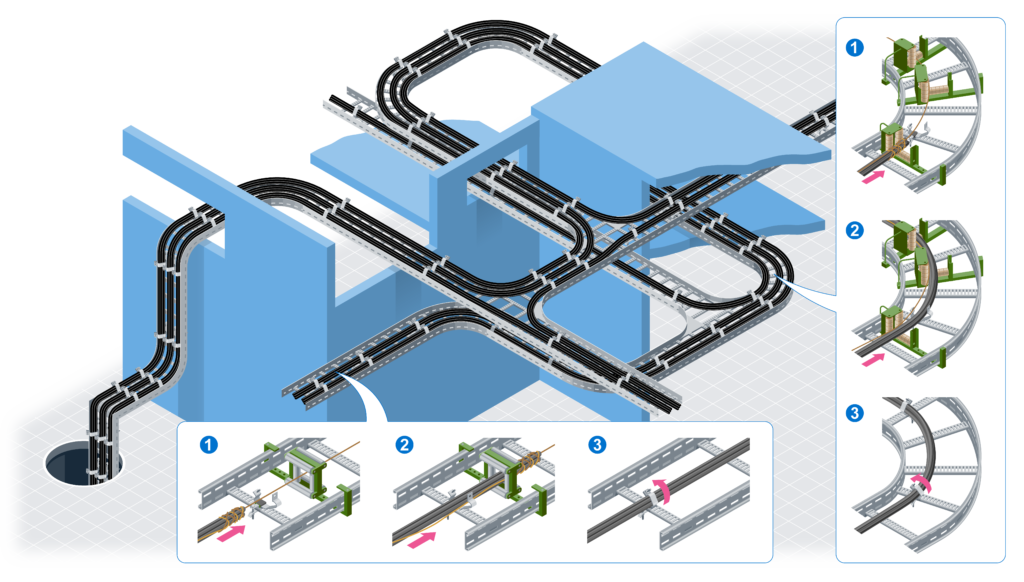
Reducing friction during cable pulling helps protect cables and maintain installation efficiency. Systems that allow cables to be pulled without pre‑installed restraint hardware simplify routing and reduce drag.
Post‑pull restraint approaches allow cables to be positioned first, then secured after alignment. This supports smoother pulls, cleaner cable layout, and easier access in high‑density power environments.
How Cable Cleats Are Specified
Cable cleat selection follows a defined engineering process. IEC 61914 provides the framework for evaluating mechanical and electrical requirements to ensure the cleat can withstand short‑circuit forces.
Key specification factors include:
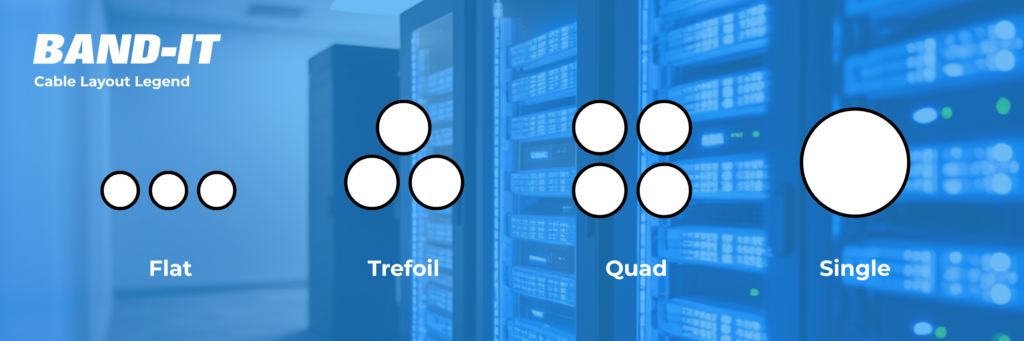
Cable Formation
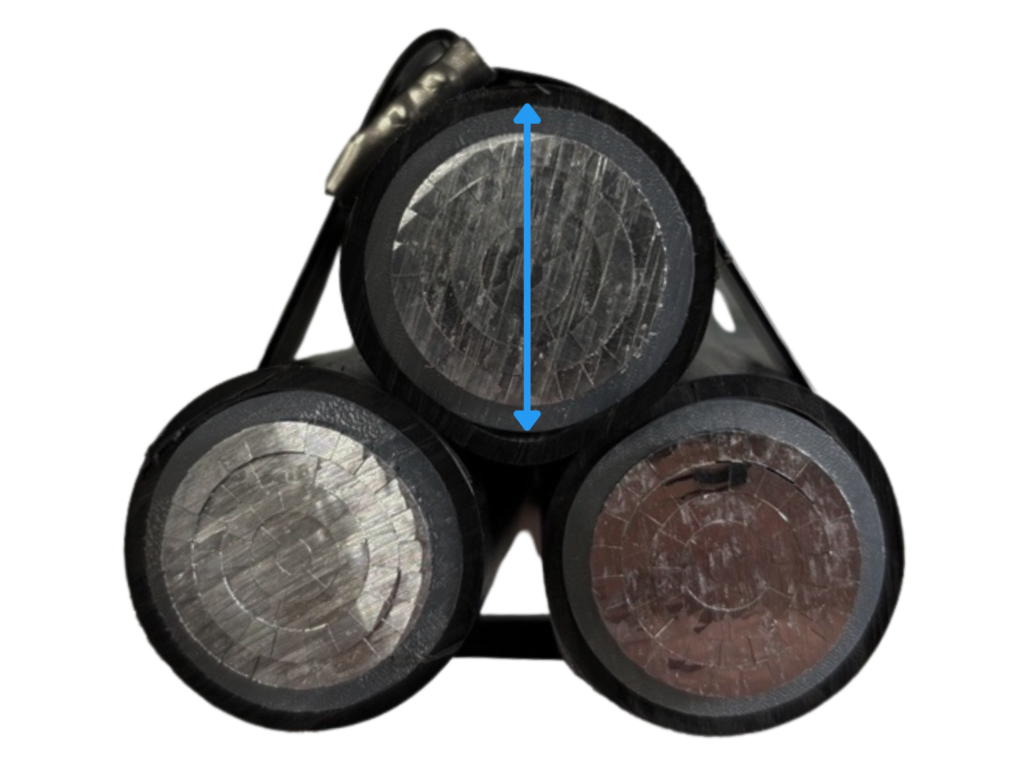
Cable diameter determines cleat size and fit. Measurements include insulation and any protective layers. A properly sized cleat provides secure restraint without over‑compression or excessive clearance.
Manufacturer sizing data and calculators are commonly used to match cable diameter to the correct cleat.
Cable Diameter
Cable diameter determines cleat size and fit. Measurements include insulation and any protective layers. A properly sized cleat provides secure restraint without over‑compression or excessive clearance.
Manufacturer sizing data and calculators are commonly used to match cable diameter to the correct cleat.
Short Circuit Current and kA Rating
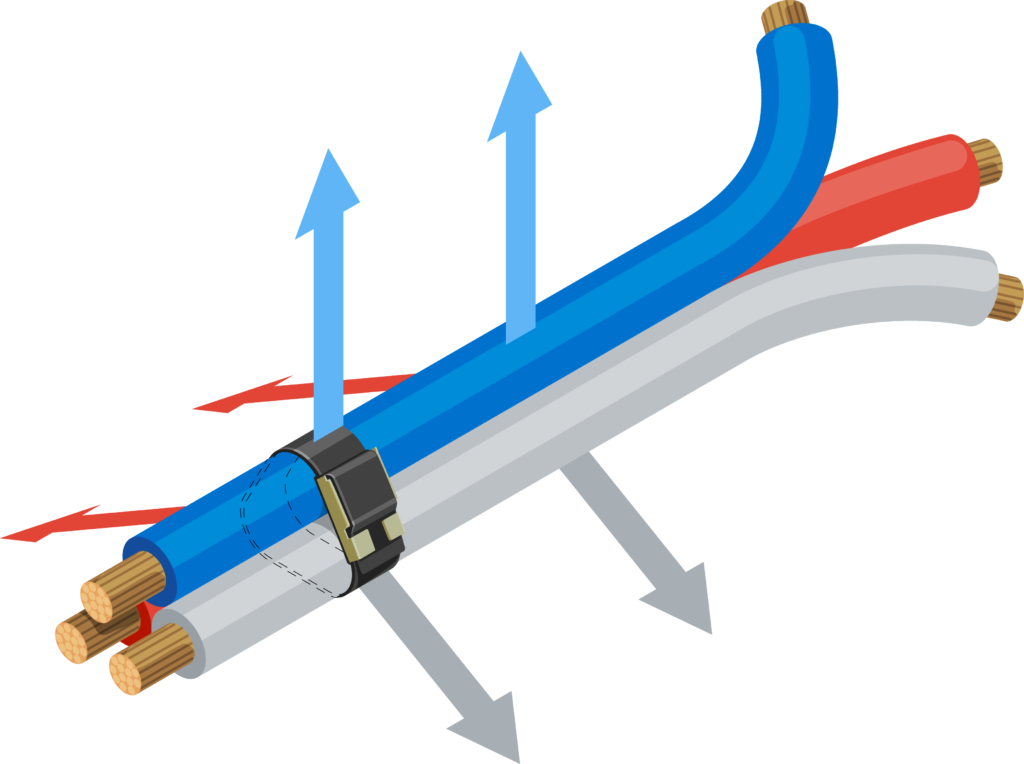
Short‑circuit current defines the forces the cleat must withstand. This is expressed as a kA rating and verified through IEC 61914 testing.
In data centers with high power density, selecting a cleat with the appropriate fault rating is essential. Both peak and RMS values are considered to ensure the cleat maintains cable position throughout the event.
Cleat Spacing and Mounting Structure
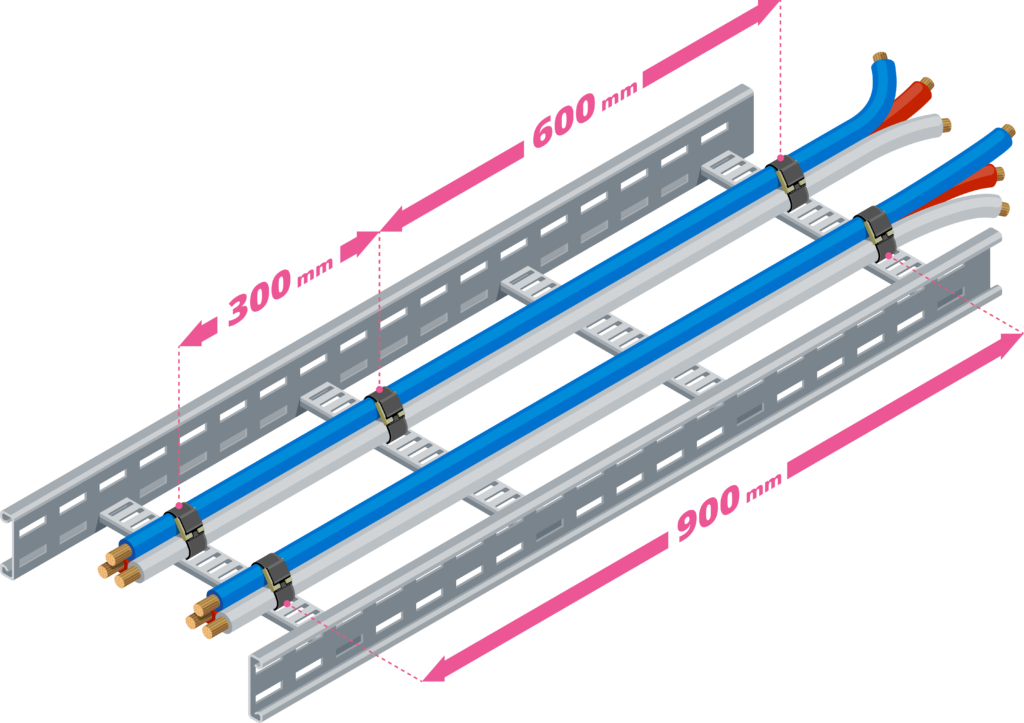
Cleat spacing influences how effectively movement is controlled along the cable run. Spacing is determined by cable size, fault current, and the strength of the mounting structure.
Ladders, trays, and support systems must be capable of transferring short‑circuit forces without failure. Proper spacing and secure mounting ensure the restraint system performs as intended.
BAND-IT BAND-FAST® Cleats vs Traditional Cleats
Traditional cable cleat systems often rely on multiple components, including brackets and pre‑installed hardware. This can require staging before cables are pulled, increasing friction and installation complexity.
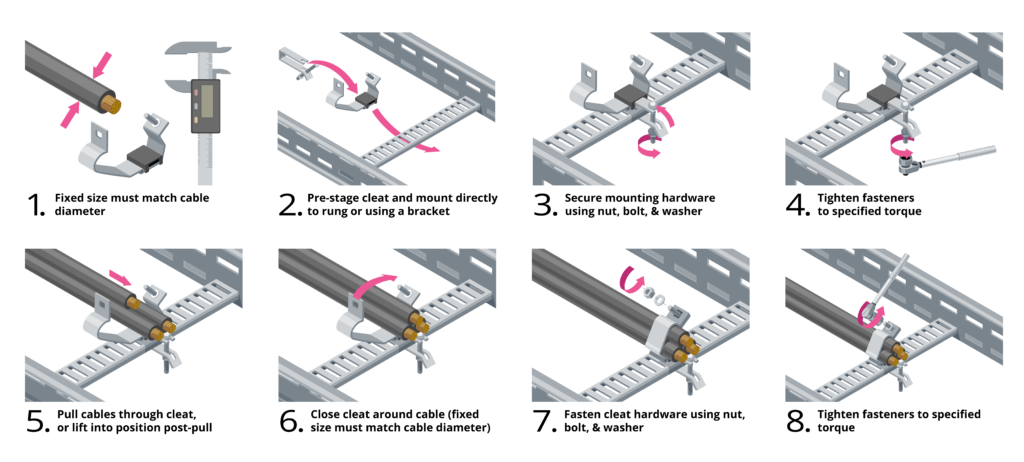
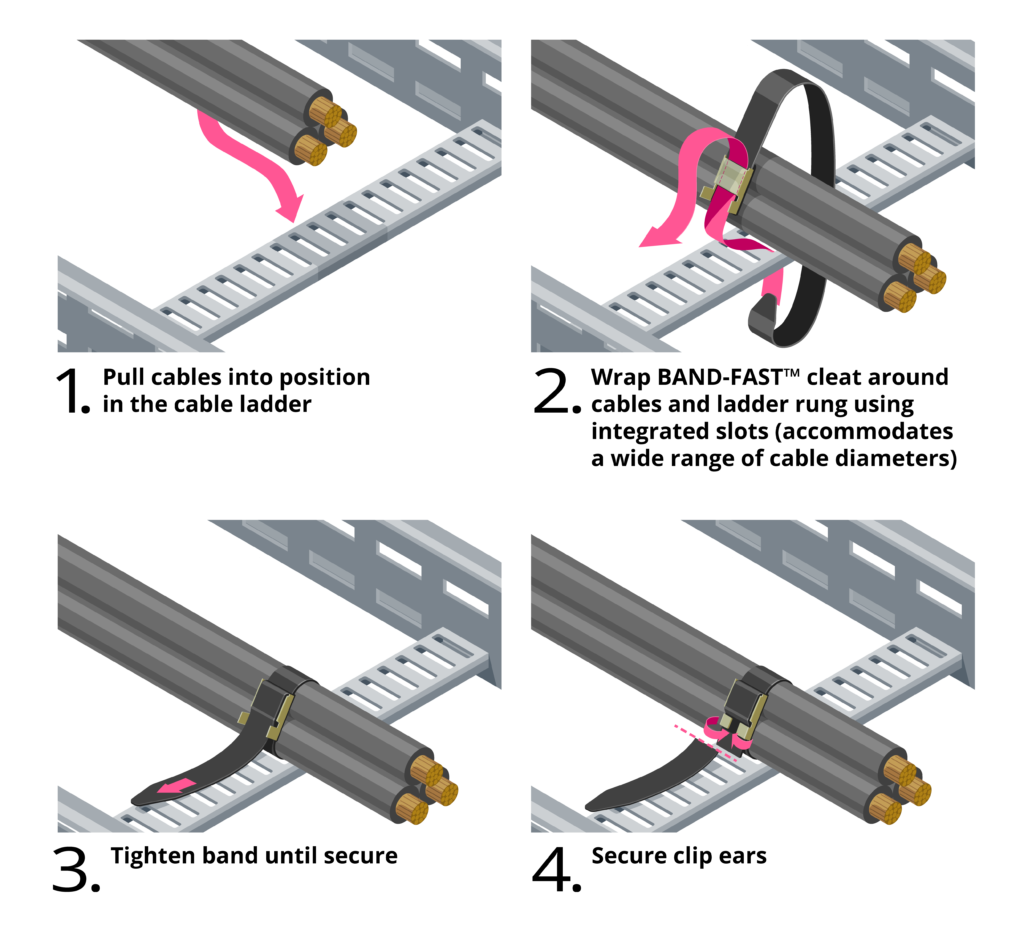
BAND‑FAST® cable cleats use stainless steel banding to secure the cleat after cables are in place. This post‑pull approach reduces components, improves access, and simplifies installation in dense trays and confined spaces.
Key differences include:
- Post‑pull installation without pre‑staging
- Fewer components to manage on site
- Low‑profile design for high‑density routing
- Stainless steel construction for long service life
- BAND-FAST cable cleats can be installed up to 3x faster than traditional cleats
BAND‑FAST cleats are tested to IEC 61914 and support compliance with relevant standards while reducing installation time and material handling.
Related Cable Management Solutions
Cable cleats are one part of a broader cable management system. Other components support bundling, routing and installation.
Explore related solutions:
These systems work together to support consistent installation and long-term performance.
Cable Cleat & Cable Restraint Frequently Asked Questions
What's a cable cleat and why is it required on power cable installations?
A cable cleat is a mechanical device used to secure power cables to trays, ladders or mounting structures, restraining the cables during a short-circuit event. During a fault, electromagnetic forces can cause cables to move violently, potentially damaging cables, insulation and surrounding equipment. Cable restraint systems are therefore used where protection against short-circuit forces is required.
What standard governs short-circuit ratings for cable cleats?
IEC 61914 is the international standard covering cable cleats used to restrain cables during short-circuit events. BAND-IT offers BAND-FAST® cable restraint solutions that have been independently tested in accordance with IEC 61914:2015, helping engineers select an appropriate restraint solution based on the requirements of the electrical system.
How do I determine the correct cable restraint spacing for my installation?
Proper spacing depends on factors such as cable configuration, cable diameter, available short-circuit current and the installation structure. Because requirements vary by application, spacing and product selection should be based on the specific electrical system and BAND-IT’s applicable technical guidance rather than using a universal spacing rule.
What makes BAND-FAST® cable restraint solutions easier to install than traditional cable cleats?
BAND-FAST® cable restraint solutions use ready-to-use, pre-cut and pre-assembled stainless steel banding, helping simplify installation and reduce the number of components installers need to manage. BAND-FAST® also accommodates variations in cable bundle diameter, providing flexibility across installation conditions without requiring a unique configuration for every diameter.
Do BAND-FAST® cable restraint solutions need to be installed before or after the cable is pulled?
BAND-FAST® cable restraint solutions can be installed after the cable pull. This allows cables to be pulled and positioned without the restraint system creating unnecessary obstructions. Once the cables are in place, the appropriate BAND-FAST® system can be installed to provide the required restraint.
WE’RE HERE TO HELP
A BAND-IT representative is ready to help. Send us your question and we’ll make sure to respond promptly. We have industry experts to help you learn more about how to solve your problems and add value to your product with BAND-IT solutions.
We can also assist you with product, pricing and technical questions. Prefer to call? Reach us at 888.738.3880.