

Rethinking Cable Cleats for High-Density Data Centers
March 10.2026 | Essential Applications
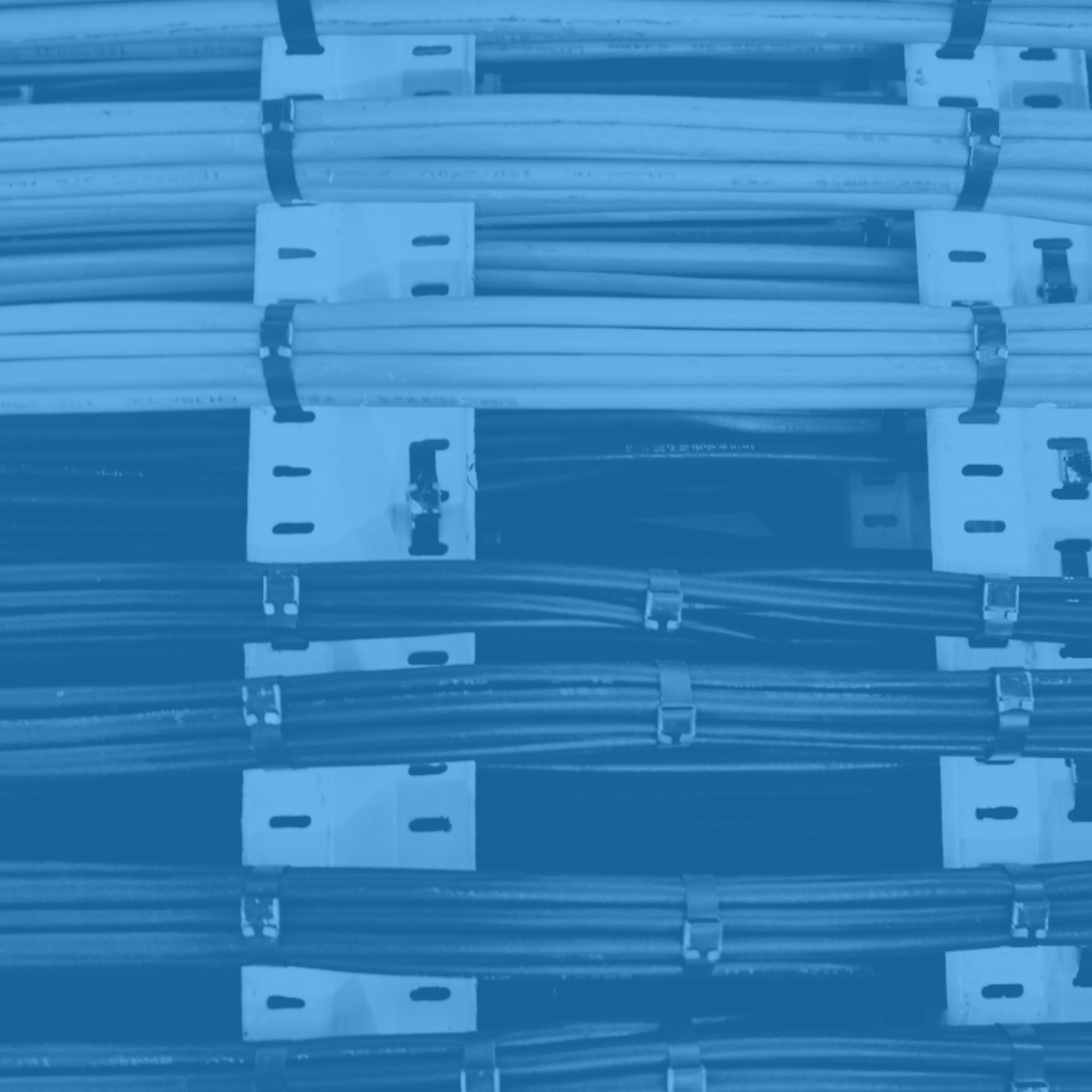
Global demand for cloud computing, AI workloads and digital services is driving rapid expansion in data center construction. Hyperscale facilities are being built across North America, Europe and Asia at an unprecedented pace.
Inside these facilities, electrical infrastructure is becoming larger and more complex. Massive amounts of power must move from substations to switchgear, generators, uninterruptible power supply systems and distribution panels.
This creates dense networks of large single-core cables routed through trays and ladders throughout the building. These conductors carry significant electrical energy and must be securely restrained as part of proper data center cable management and data center power distribution design.
Electrical system design often receives the most attention during early planning stages. Yet cable restraint systems frequently become a bottleneck during installation.
The Installation Challenges Behind Traditional Cable Cleats
Cable cleats are essential for securing power cables and preventing movement during fault events. However, many traditional systems create practical challenges for engineers and installers.
Installation Friction
Traditional cleats often require staging before the cable pull begins. Installers must predict exact cleat locations and mount hardware in advance. This creates several problems.
Cleats placed in the tray can interfere with rollers used during cable pulling. When large conductors are pulled across trays with multiple feeders in parallel, even small obstructions increase friction and tension.
After cables are installed, crews must work around heavy conductors in confined trays to fasten the cleats. In dense installations, this becomes slow and physically demanding.
Many traditional products also involve several hardware components. Each additional part adds handling time and increases the chance of errors during installation.
Engineering Complexity
Engineering teams face a different challenge. Conventional cleats often require multiple fixed sizes to match different cable diameters and configurations.
Designers must calculate cleat spacing, select multiple SKUs and plan for configuration changes as routing evolves.
In hyperscale builds that may require tens of thousands of cleats, these calculations create a substantial engineering workload.
Project Impact
These challenges can ripple across the project. Extra hardware increases material cost. Installation time grows with each additional step. Schedule pressure intensifies when crews must revisit completed cable runs.
What appears to be a small component in the electrical design can influence labor hours, procurement complexity and construction timelines.
Why Cable Cleats Are Essential for Electrical Safety
Cable restraint is not only an installation concern. It is also a safety requirement. During a short-circuit event, large electrical currents create strong magnetic forces between conductors. These forces can cause cables to move violently within a fraction of a second.
In many cases, the peak force occurs within about 0.005 seconds. Circuit breakers respond after several cycles, which is typically more than 10 times slower.
Without proper restraint, cables can whip outward or shift within the tray. This movement can damage insulation or equipment and may interrupt power delivery.
Cable cleats provide the mechanical restraint required to hold conductors in place during these events. For this reason, the international standard IEC 61914 defines testing requirements for cable cleats used in high-fault current environments.
Compliance with this standard verifies that cable restraint systems can withstand electromechanical forces produced during a short circuit.
How Cable Cleat Requirements Change in High‑Density Data Centers
In high‑density data centers, cable cleat selection is influenced by more than short‑circuit ratings alone. While compliance with standards such as IEC 61914 is increasingly specified across regions, the physical and operational realities of modern data center construction introduce additional specification considerations.
Power distribution systems in data centers typically involve large quantities of single‑core cables routed through tightly packed tray and ladder systems. Limited space, parallel feeder arrangements, and evolving routing plans place constraints on both cleat geometry and installation sequence. As a result, engineers must evaluate not only restraint performance, but also how a cable cleat integrates into dense cable pathways.
Installation methodology is another key factor. Unlike more static industrial environments, data center cable routes are often installed under aggressive schedules. Restraint systems that require pre‑staging or interfere with cable pulling can slow progress and increase rework. Specifications increasingly favor solutions that allow restraint installation after cables are in place, reducing friction during pulls and improving installer access.
Engineering complexity also scales quickly in hyperscale projects. Multiple conductor sizes and formations can require extensive cleat sizing calculations when traditional fixed‑size systems are used. In large facilities, this can add significant design effort and complicate procurement. As a result, many data center specifications prioritize restraint approaches that reduce SKU counts while maintaining compliance with applicable short‑circuit standards.
Finally, global consistency plays a growing role. Hyperscale operators building across multiple regions are standardizing the requirement of IEC‑tested restraint performance to streamline design and ensure consistent safety margins worldwide.
Together, these factors mean that cable cleat specifications for high‑density data centers must balance electrical performance, physical integration, and installation practicality. Cleat systems that address all three enable engineers and contractors to maintain compliance while supporting the speed and scale required in modern data center construction.
A Simpler Approach to Cable Cleats
Modern data center construction requires solutions that address both engineering performance and installation efficiency. Any restraint system chosen must still meet applicable short‑circuit testing and installation requirements. BAND-IT developed the BAND-FAST® Cable Cleat Solution to simplify cable restraint for high-density power systems.
Post-Pull Installation
Unlike many conventional cable cleats, BAND-FAST is installed after the cables are pulled into place. Installers can secure the cleat directly to the tray or ladder without pre-staging hardware. This reduces friction during cable pulls and eliminates the need to predict cleat positions in advance. Crews can approach the installation from multiple angles, which helps in tight tray spaces common in data centers.
Universal Fit Reduces Complexity
BAND-FAST clamps accommodate a wide range of cable diameters. This reduces engineering calculations and simplifies procurement planning. Inventory management becomes easier since fewer part numbers must be stocked on site.
Compact Design for Dense Cable Trays
Data center cable runs often fill trays to capacity. A bulky cleat can limit routing options or reduce usable space. The low-profile design of BAND-FAST allows installation directly on cable ladder trays without brackets. This preserves tray capacity and supports dense layouts used in modern facilities.
Verified Short-Circuit Performance
BAND-FAST cleats are independently tested to IEC 61914 for short-circuit restraint. PPA-coated and uncoated stainless steel versions are available to support different environments. The construction also meets Low Smoke Zero Halogen requirements commonly specified for data center facilities.
Together, these characteristics allow engineers to specify cable restraints with confidence while supporting installation efficiency in the field.
Real World Hyperscale Deployments
Large-scale deployments demonstrate how installation simplicity can influence project outcomes.
APAC Hyperscale Data Center Campus
A global hyperscale operator began construction on a multi-building data center campus in the Asia Pacific.
The project faced compressed schedules and urgent material requirements. Contractors needed a cable restraint solution that could arrive quickly and simplify engineering workload.
The project team selected BAND-FAST cable cleats paired with the DT2000 digital cable banding tool.
The solution included more than 20,000 cleats along with installation tooling. The first shipment arrived roughly three weeks after the purchase order.
Engineers reduced cleat sizing calculations by approximately 80 percent because a single product covered multiple cable configurations.
Installers used the digital banding tool to apply consistent tension while tracking installation progress for daily reporting.
The result allowed crews to begin work on schedule while maintaining quality control across thousands of installations.
Western Europe Multi-Facility Campus
A large hyperscale campus in Western Europe encountered a different challenge.
The original specification required multi-component restraint systems that used rubber sleeves. Dense cable trays made these assemblies difficult to install.
Late phase design adjustments required a faster approach that also met IEC short-circuit testing requirements.
The project team evaluated BAND-FAST cleats during an on-site demonstration. More than 24,000 units were deployed during the later construction phases.
The installation approach shifted from multiple components to a single-cleat platform. Crews completed installations faster, and the slim profile allowed improved cable routing in crowded trays.
The Growing Role of Global Compliance
Cable restraint requirements are evolving as electrical systems grow larger and more powerful. The international standard IEC 61914 defines testing methods for cable cleats, including axial strength and resistance to short-circuit forces.
Several other standards reference similar principles.
- In North America, NEC 392.20(C)(United States) requires conductors to be securely bound to prevent movement caused by magnetic forces during fault conditions.
- NEMA BI 50018, also referenced primarily in the United States, reflects cable cleat testing methods that align closely with IEC 61914 principles.
- In Canada, CSA C22.2 No. 61914 adopts the same cable cleat testing and performance framework defined in IEC 61914.
- For offshore and energy installations globally, API RP 14F provides guidance for securing conductors subject to mechanical forces in platform and offshore environments.
Hyperscale operators often build facilities in multiple regions. Many are standardizing around IEC level performance so that designs remain consistent across global projects.
Installation Speed Is Now a Strategic Advantage
Data center construction is influenced by several pressures.
Project schedules are tightening as demand for computing capacity accelerates. Labor availability can limit how quickly installations progress. Supply chain constraints continue to affect hardware availability.
Under these conditions, solutions that reduce installation complexity can make a measurable difference.
Cable cleats designed for post-pull installation help crews move quickly through dense tray sections. Products that reduce SKU counts simplify engineering planning. Reliable supply helps avoid delays during critical construction phases.
In large facilities where thousands of restraints must be installed, even small time savings per cleat can translate into substantial labor reduction.
Supporting the Next Generation of Data Center Infrastructure
As computing demand increases, electrical infrastructure inside data centers will continue to grow in scale and density.
Cable restraint systems must support this evolution. They must withstand short-circuit forces while fitting into compact tray environments and supporting efficient installation.
The BAND-FAST Cable Cleat Solution represents one approach to meeting these requirements. With IEC-tested performance, compact design and compatibility with a digital cable banding tool, the system supports safe cable restraint while helping installation teams maintain construction schedules.
For engineers responsible for data center power distribution and data center cable management, the choice of cable cleats is more than a minor hardware decision. It can influence safety, installation efficiency and long-term reliability across the entire facility.
Contact BAND-IT for design guidance and cable cleat recommendations for your project.