

Using Hose Clamps in Hose Fabrication: Applying STAMPED to Specify the Right Assembly
March 24.2026 | Essential Applications
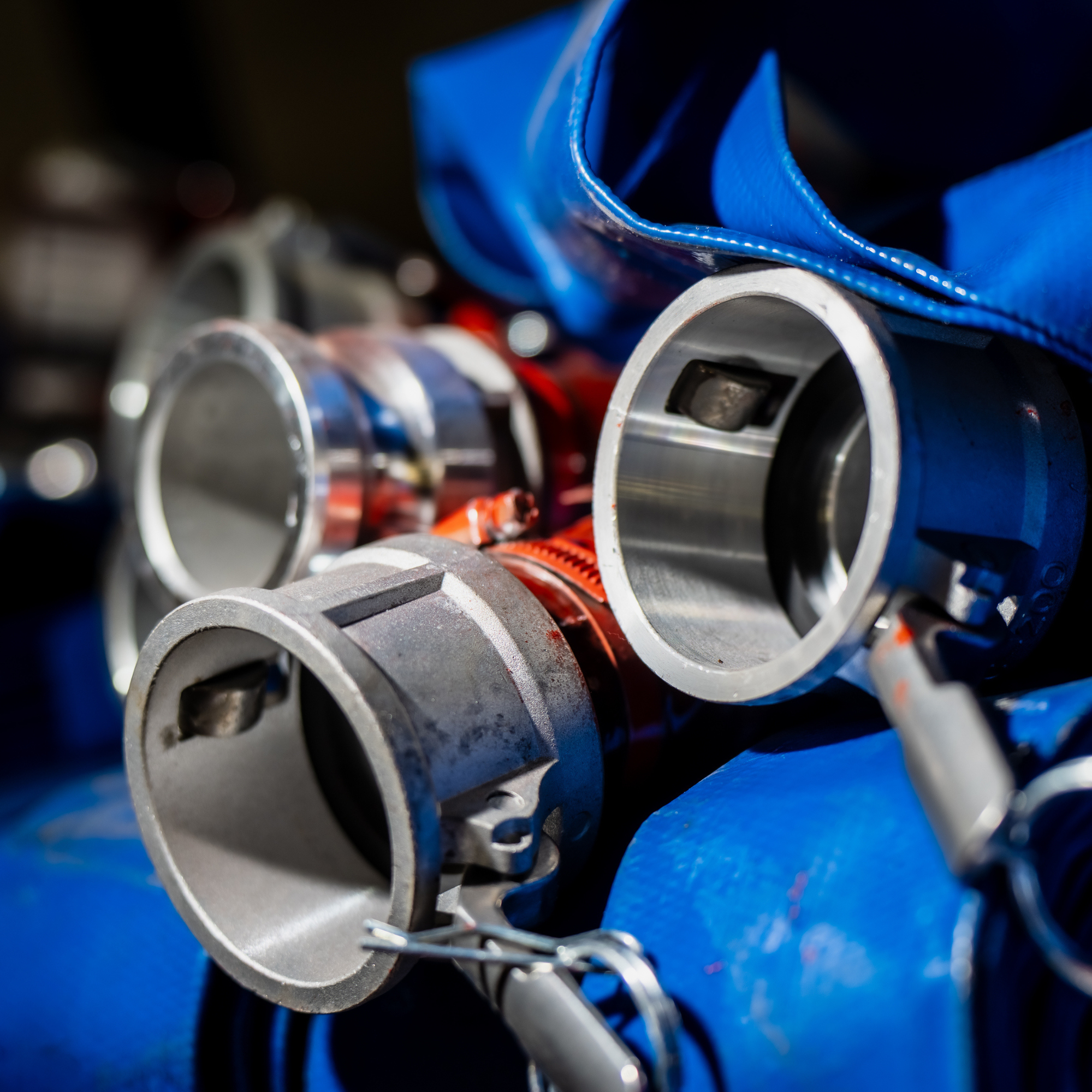
In hose fabrication, performance issues rarely come from the hose alone. More often, failures, leaks, and rework trace back to the hose attachment method. This makes attachment method selection just as important as the hose selection itself for fabricators, OEMs, and distributors.
The STAMPED (size, temperature, application, material, pressure, ends, delivery) framework is widely used in the hose industry to guide hose and fitting selection. The same principles are equally valuable when determining whether a hose clamp is the right attachment method, how it should be specified, and what materials should be used in a fabricated hose assembly.
When STAMPED is applied effectively, hose clamps provide a reliable, repeatable solution across hose applications. The key is understanding how each element of STAMPED should influence clamp choice, material selection, and assembly design.
S – Size: Hose Diameter, Tolerance, and Clamp Fit
In hose fabrication, size refers to the installed outside diameter (OD) of the hose once it is fully seated on the fitting, not the nominal hose size. Clamp selection must be based on this installed condition to ensure proper fit, sealing consistency, and efficient installation.
A correctly sized clamp (Diameter) should:
- Slide easily over the hose and fitting assembly
- Fall within clamp’s effective working range
- Fully tighten in one installation cycle (Dependent on installation tool)
Selecting a clamp that is significantly oversized in diameter increases the risk of uneven compression and incomplete clamp formation.
Installation Efficiency in Fabrication Environments
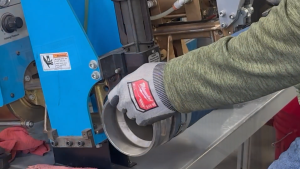
In production setting using bench-mounted or powered installation tools, clamp size directly affects installation quality. These tools are designed to deliver a consistent, repeatable installation in a single pull. Oversized clamps may require repeated pull cycles, preventing full and uniform clamping in one cycle.
Best practice is to select a clamp that fits comfortably over the hose and fitting assembly while leaving sufficient adjustment for tightening. In many applications, this means choosing a clamp with approximately 1/2 inch to 1 inch of additional diameter capacity beyond the measured installed hose OD.
While some BAND-IT installation tools are capable of installing clamps with a wide range of diameters (Including larger diameter clamps onto relatively small hose assemblies) oversizing can still introduce installation inefficiencies and unnecessary material usagee without improving sealing performance.
Right-sizing clamp diameter supports one-pull installations, reduces waste, and helps ensure consistent assembly quality across hose fabrication operations. BAND-IT offers clamps ranging from .8125″ up to 8″ diameter.
T – Temperature: Selecting Clamp Alloys for Thermal Performance
Temperature considerations extend beyond the hose material and reinforcement. Clamp material must also perform reliably across the full temperature profile of the application, including:
- Internal media temperature
- External ambient temperature
- Heat exposure from nearby equipment or processes
Temperature extremes can influence material strength, corrosion resistance, and long-term clamp performance. A hose assembly designed for moderate service may experience premature issues if the clamp material is not suited to elevated temperatures washdown cycles, or environmental exposure.
Metals Selection in Relation to Temperature
BAND-IT offers a range of clamp materials to match different thermal and environmental demands which can be found in the BAND-IT Metals Data Sheet.
- Galvanized Carbon Steel (GCS) is commonly used in controlled environments with limited temperature variation and minimal corrosion exposure, where cost and efficiency are the primary considerations.
- 201 Stainless Steel provides improved temperature stability and corrosion resistance compared to carbon steel, making it suitable for many general industrial hose fabrication applications.
- 304 Stainless Steel is widely specified where broader temperature capability, oxidation resistance, and long-term durability are required.
- 316 Stainless Steel is frequently selected for applications combining elevated temperatures with aggressive washdown, chemicals, or marine and outdoor exposure, where enhanced corrosion resistance is critical.
- In extreme environments, such as high-temperature service combined with severe corrosion or offshore exposure, Alloy 625 may be specified to retain strength and corrosion resistance under conditions that exceed the limits of conventional stainless steels. T – Temperature: Selecting Clamp Alloys for Thermal Performance
A – Application: Installation Flexibility and Serviceability
Application is often the deciding factor in whether a hose clamp is the right fastening method. Beyond pressure and media considerations, fabricators and end users must account for how and where the hose assembly will be installed, serviced and maintained over its life.
Hose clamps are well suited to applications where installation flexibility, reusability (fittings), and service access matter. BAND-IT’s range of clamp installation tools allows assemblies to be installed and maintained across multiple environments without compromising quality.
Installation Versatility Across Environments
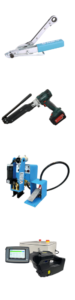
BAND-IT supports a wide range of installation scenarios through dedicated tooling options:
- Hand-held field tools, such as the T30069 and Pok-It II, allow for simple, controlled installations in maintenance and field repair situations.
- Battery powered tools, including the UL4000-D and CP4000-D, provide mobility and consistency where access to air or power is limited.
- Bench mount tools, such as the S35099 and SM1700, support efficient shop-based fabrication with controlled installation parameters.
- For higher-volume operations, production grade systems like the IT5000 and IT8000 deliver speed, consistency, and process control suitable for OEM and large-scale hose fabrication.
This breadth of tooling ensures that the same clamp design can be installed consistently in the shop, field, and during schedules maintenance, supporting standardized specification across a hose’s lifecycle.
Serviceability Compared to Crimped Assemblies
In contrast, crimped hose assemblies typically require specialized, stationary equipment and are less adaptable outside controlled shop environments. While crimping remains appropriate for certain applications, it can be:
- More cumbersome in field or remote locations
- Less forgiving during repairs or replacements
- Dependent on access to specific crimp dies and presses
Hose clamps provide a flexible alternative where on-site installation or maintenance is required, enabling end users to service equipment themselves or preform field repairs while still achieving installation quality comparable to shop-built assemblies.
M – Material/Media: Compatibility and Corrosion Considerations
Material selection under STAMPED considers what the hose assembly is exposed to internally and externally over its service life. While temperature plays a role, the media being conveyed and the surrounding environment often drive clamp material requirements just as strongly.
Clamp material must be compatible with:
- The internal media flowing through the hose
- External exposure such as chemicals, washdown agents, salt, or industrial atmospheres
- The overall corrosion risk present in the application
Selecting the correct clamp alloy helps prevent corrosion-driven failures, loss of clamping force, and premature replacement.
Alloy Selection Based on Media and Environment
- Galvanized Carbon Steel (GCS) is commonly used in applications with non-corrosive media and controlled external environments. It is often selected where exposure to chemicals or moisture is limited and cost efficiency is a priority.
- 201 Stainless Steel provides improved corrosion resistance compared to carbon steel and is suitable for many general industrial hose assemblies where mild chemicals or intermittent moisture may be present.
- 304 Stainless Steel is widely specified for broader chemical compatibility and resistance to oxidation, making it well suited for applications involving water, cleaning agents, and general industrial fluids.
- 316 Stainless Steel offers enhanced resistance to chlorides, chemicals, and harsh washdown environments, and is frequently selected where media or environmental exposure would accelerate corrosion in lower-alloy stainless steels.
- In highly aggressive service conditions, such as corrosive chemicals combines with severe environmental exposure, Alloy 625 may be specified to provide exceptional resistance to corrosion mechanisms that exceed the capabilities of conventional stainless steels.
Material as a Long-Term Reliability Decision
Media compatibility is not limited to the hose tube and fittings. Clamp material must also withstand prolonged exposure without degrading or compromising the integrity of the assembly. Choosing an alloy that aligns with the media and environment helps ensure that clamp performance remains stable throughout the life of the hose assembly.
P – Pressure: Assembly Pressure, Clamp Performance, and System Limits
Pressure is a system-level consideration in hose fabrication. The pressure capability of a hose assembly is determined by the combined performance of the hose, fittings, and attachment method, including hose clamp.
BAND-IT hose clamp performance data, based on hydrostatic testing conducted in accordance with ASTM D380, shows that hose clamp secured assemblies are commonly used in applications up to approximately 300 psi, depending on the clamp type, hose construction, coupling design, and installation method.* As a general guideline, applications under 300 psi are often appropriate candidates for hose clamp attachment methods when the full assembly is properly specified and tested.
*This reflects typical performance ranges observed in controlled testing, not a universal pressure rating.
Clamp Design, Width, Hose, and Fittings All Influence Pressure Capability
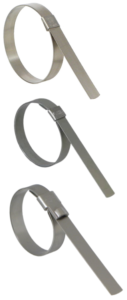
Pressure performance varies based on:
- Clamp type (Center Punch, Junior® Smooth ID, Ultra-Lok® Preformed Clamps)
- Clamp band width, which influences load distribution and resistance to hose movement
- Hose size and construction
- Fitting style and shank geometry
- Installation method and tool consistency
Clamp width plays a role in how clamping force is distributed at the hose-to-fitting interface. Wider clamps spread applied force over a larger surface area, improving retention and reducing localized stress on the hose under pressure. Right-sizing clamp width for the hose diameter and pressure conditions supports consistent sealing performance.
BAND-IT testing shows that Junior Smooth ID and Ultra-Lok clamps can support higher working pressures than more basic attachment methods due to their locking mechanisms and load distribution, while maintaining appropriate safety factors.
Coupling interchange, material variation, or deviation from recommended installation practices can significantly affect real world pressure performance. For this reason, burst and working pressure data should always be verified and must not conflict with hose manufacturer recommendations or application specific requirements.
E – Ends: Interface Design, Locking Mechanisms, and Seal Integrity
Ends refer to more than just fitting type. In hose fabrication, the interface between the hose, fitting, and clamp (and how that interface is mechanically secured) plays a critical role in sealing performance and long-term reliability.
Clamp design, including the locking mechanism and internal band profile, directly affects how loads are transferred across the hose-to-fitting interface.
Locking Mechanisms and Retention
Different clamp locking mechanisms influence how tension is applied and maintained after installation. BAND-IT clamp designs are engineered to provide positive mechanical locking, which helps prevent relaxation due to vibration, pressure cycling, or hose material creep.
Key considerations include:
- Lock engagement under full tension, which ensures the clamp remains secured at the installed diameter
- Resistance to back-off or loosening in dynamic applications
- Repeatable clamp geometry when installed with the correct tooling
The choice of locking mechanism should align with application demands, including vibration, service access, and installation method, to ensure consistent retention throughout the assembly’s life.
Smooth ID vs. Profiled Internal Surfaces
The internal profile of the clamp band influences how the hose material interfaces with the fitting:
- Smooth ID Clamp designs provide a uniform, gap-free internal surface that distributes compression evenly. This helps:
- Minimize leak paths
- Reduce localized stress on the hose cover
- Improve compatibility with thinner-walled or stiffer hose constructions
- Profiled or non-smooth internal designs may be acceptable in certain applications but can concentrate compression at discrete points and leave opportunity for leak paths.
Matching the internal band profile to the application, hose material, and fitting design helps ensure consistent sealing without damaging the hose or compromising retention.
D – Delivery: Repeatability, Documentation, and Quality Control
Delivery goes beyond shipping date. In hose fabrication, it includes:
- Consistent build specifications
- Documented materials and clamp selection
- Traceability across repeat builds
Standardizing clamp selection as part of fabrication best practices reduces variation, supports training, and helps maintain quality as production scales. This is especially valuable for distributors and OEMs supporting customers with recurring hose assembly needs.
Bringing STAMPED Together for Hose Clamp Selection
When hose clamps are evaluated using STAMPED principles, they move beyond commodity components and become engineered elements within a complete hose assembly. By considering size, temperature, application, material, pressure, ends, and deliver together, fabricators can make fastening decisions that are repeatable, defensible, and fit for real-world operating conditions.
Applying STAMPED in this way helps fabricators:
- Determine when hose clamps are the right fastening method
- Specify clamp size, material, and installation method correctly
- Maintain consistent assembly quality from shop to the field
- Reduce rework, leakage, and premature failures over the life of the assembly
Hose clamps are not a universal solution for every pressure or application. However, when properly specified and installed, they offer a reliable, serviceable, and flexible fastening solution across many hose fabrication environments.
Need Help Specifying the Right Clamp?
Every hose assembly is different. Media, pressure, installation environment, tooling availability, and service requirements all influence the best fastening solution.
BAND-IT’s application specialists can help you:
- Evaluate whether a hose clamp is appropriate for your application
- Select the right clamp style, material, and installation method
- Connect you to our distribution network
- Support repeatable specifications across production and maintenance environments
To discuss your specific hose fabrication requirements, contact BAND-IT to speak with an expert.