

Why Mechanical Cable Restraint is Becoming a Global Baseline
April 16.2026
Understanding IEC 60364, IEC 61914, and What Is Driving Cable Cleat Specifications in NEC-Based Installations
Short circuit risk in modern electrical systems is no longer defined only by heat and clearing time. Higher available fault currents, widespread use of single-core power cables, and denser electrical infrastructure mean that when a short-circuit event occurs, mechanical forces can cause equipment damage and injury before electrical protection from circuit breakers is triggered.
Around the world, safety standards to mitigate damage from mechanical forces are already addressed through mature IEC-based installation standards. In the United States, the same physical risks exist, but the guidance has historically been less explicit. Understanding how these frameworks align explains why mechanical cable restraint, and cable cleats in particular, are increasingly being specified globally and in U.S. projects alike.
The Global Influence of the IEC in Electrical Safety
The International Electrotechnical Commission (IEC) develops international standards that form the basis of low-voltage electrical installation rules across Europe, Asia-Pacific, the Middle East, Africa, and much of Latin America. At the core of this framework is IEC 60364, the global reference standard for low-voltage electrical installations.
A defining feature of IEC 60364 is its recognition that electrical safety depends not only on protective devices, but on how wiring systems are selected, installed, supported, and restrained throughout their service life. Electrical protection and mechanical integrity are treated as related, but distinct responsibilities within the IEC framework.
The separation is deliberate and it shapes how short-circuit risk is managed in practice.
For more insight into international standards, reference GT Engineering’s IEC 60364 vs NEC resource.
One System, Two Types of Risk
Mechanical cable restraint has become standard practice in many regions because electrical faults are mechanical events as well as electrical ones. When short-circuit current flows, conductors experience electrodynamic forces that act almost instantly.
IEC 60364 reflects this by separating responsibility across different parts of the standard:
- Thermal and electrical effects, including overload and fault current magnitude, are addressed in 60364-4-43, which governs electrical protection using circuit breakers and fuses.
- Mechanical integrity of wiring systems, including how conductors are installed and supported to withstand internal and external stresses, is addressed in IEC 60364-5-52.
The principal behind this structure is straight forward:
- Limiting current does not automatically prevent movement.
- Overcurrent protective devices are designed to interrupt current, limit temperature rise, and reduce fire risk. They are not intended to control the mechanical response of conductors in the first milliseconds of a fault.
- This separation is not a gap in the standards but deliberate allocation of responsibility within the IEC framework.
- That responsibility belongs to the installation itself, rather than to the protective device.
What Happens During a Short Circuit
IEC 60909, the IEC standard for calculating short-circuit currents, defines a peak short-circuit current that occurs within the first half-cycle following fault inception, typically within 8 to 10 milliseconds.
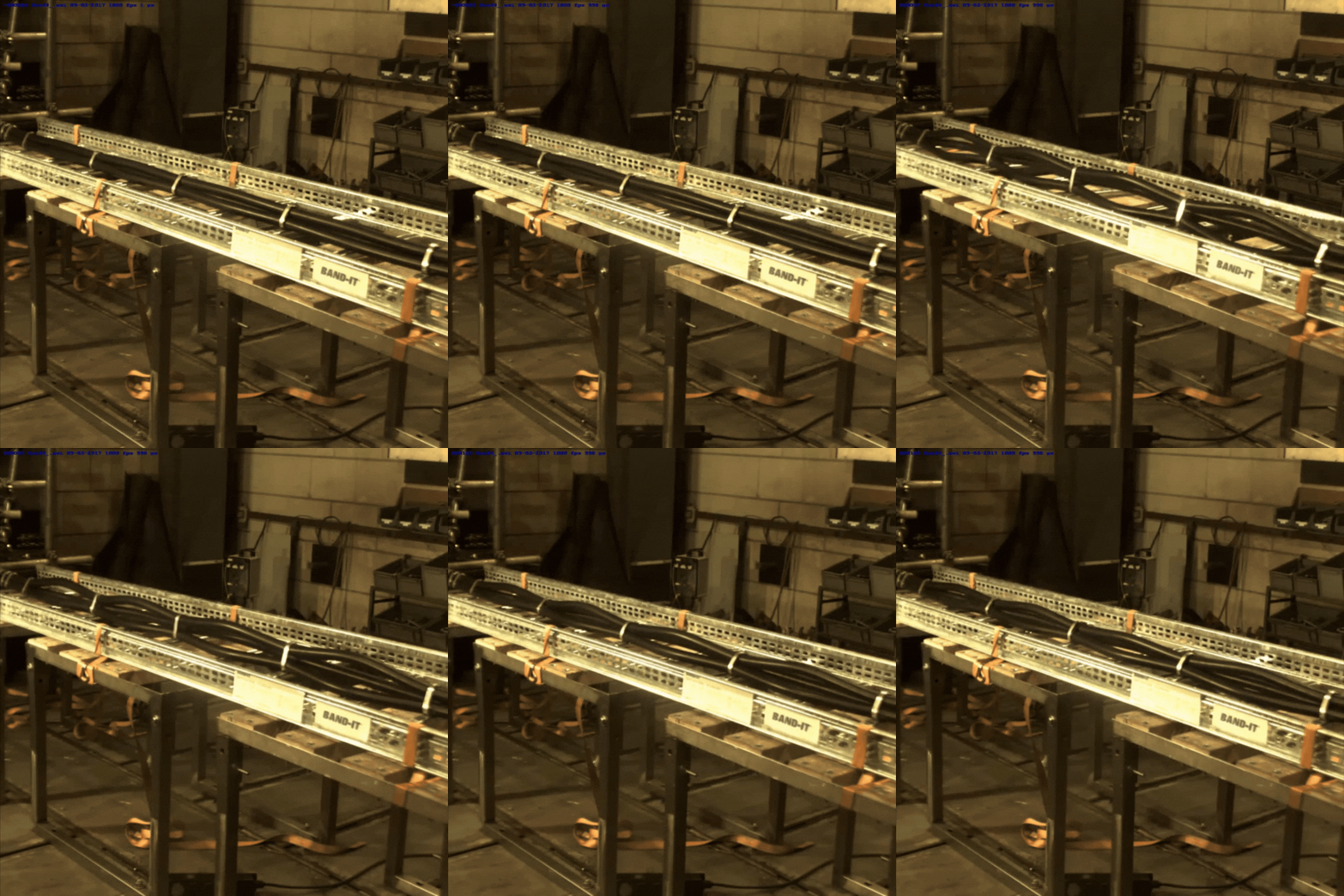
Demonstration of short circuit event with improper cable restraint (Left) vs a BAND-IT BAND-FAST Cable Cleat (Right)
Short-circuit protection therefore operates on two different time scales. Electrical protection devices limit current and energy over time, once sensing and actuation occur. Mechanical forces, by contrast, act immediately and are governed by the instantaneous peak current at fault inception. This separation of time scales is why mechanical restraint is treated independently within installation standards.
This peak current governs the electrodynamic forces acting on conductors, supports, and terminations, and it occurs before circuit breakers or fuses can interrupt the current, making installation survivability a primary concern during fault conditions.
For this reason, electrical equipment and protective devices are rated to withstand these forces, not to prevent them. Overcurrent protection limits energy over time. Mechanical restraint addresses forces that occur before time-based protection can act.
IEC standards treat these functions as complementary, not interchangeable.
Where Cable Cleats Fit
Cable cleats provide the mechanical restraint that electrical protection does not deliver. By fixing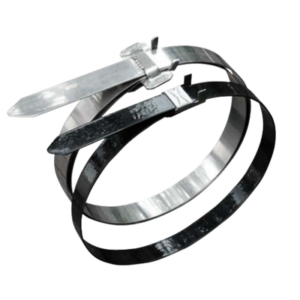 conductors in position and maintaining separation, properly designed cleats prevent uncontrolled movement, conductor clash, and damage to insulation, supports, and terminations during fault conditions.
This is not redundant protection. It addresses a different failure mode on a different time scale. Circuit breakers primarily manage thermal and energy related risk. Cable cleats manage mechanical forces at fault inception. Together, they form the safety model reflected throughout IEC-based installation practices.
Why IEC 61914 Exists
IEC 61914, cable cleats for electrical installations, does not introduce a new safety requirement. It exists because the requirement to manage mechanical effects already exists within installation standards like IEC 60364.
IEC 61914 provides:
- Standardized test methods for cable restraints.
- Performance classification under short-circuit forces.
- A consistent way to demonstrate mechanical capability.
This mirrors the broader IEC approach: Installation standards define what must be achieved, while product standards define how compliance is verified.
In IEC-aligned regions, cable cleats tested to IEC 61914 are the accepted means of demonstrating compliance with mechanical restraint requirements, especially for single-core a.c. cables and high-fault-level installations.
Converging Standards Beyond the IEC
Globally, IEC-based standards already govern the majority of low-voltage electrical installations. Mechanical cable restraint is widely treated as a normal part of compliant design where fault currents and conductor configuration warrant it.
The United States has historically followed a different regulatory structure, relying on the NEC, UL, and NEMA for guidance rather than direct adoption of IEC 60364. Even so, the direction of specification is increasingly aligned even if those conclusions are currently being expressed through guidance, specification, and owner requirements rather than prescriptive code language.
NEC Article 392.20(C) for example, already require single conductors in cable tray to be secured: “Single conductors connected in parallel in cable tray be securely bound in circuit groups to prevent excessive movement due to fault-current magnetic forces.” More recently, NEMA BI 50018-2024 explicitly addresses the mechanical securing of conductors to withstand electrodynamic forces during short-circuit events.
These documents stop short of mandating specific products, but they reinforce the same engineering conclusion reached by IEC standards: Mechanical restraint becomes a required consideration when electrodynamic forces are present.
Why Mechanical Cable Restraint Is Becoming More Relevant
Several factors are accelerating attention to cable restraint, particularly in the United States. The most visible is the explosive growth of data centers. Hyperscale operators build globally and are accustomed to IEC-derived national codes where mechanical restraint under fault conditions is already expected. These owners evaluate installations based on survivability, not minimum compliance.
At the same time, modern facilities are seeing higher available fault currents even in low-voltage systems, increased use of single-core conductors for flexibility and ampacity, and denser electrical infrastructure in confined spaces. In contrast, U.S. installation still commonly relies on plastic or nylon ties in applications where short-circuit forces can far exceed their mechanical capability. As a result, global owners and sophisticated end users are increasingly driving specifications that call for engineered mechanical restraint, aligning U.S. projects with practices long established elsewhere.
The question is shifting from “Is this permitted?” to “Can the installation be shown to withstand a real fault?“
A Global Baseline and a Practical Next Step
For electrical engineers, design firms, contractors, and installers, the implication is clear: Cable cleats are a best-practice structural element in systems where electrodynamic forces must be managed.
Mechanically, cleats do not depend on voltage class. The forces they resist are driven by current, spacing, and geometry. Where fault currents exist, mechanical restraint matters.
Projects that continue to rely on improvised solutions risk falling behind owner expectations, global practice, and the growing emphasis on demonstrable performance.
To understand how engineered cable cleats are specified, tested, and applied within this framework, we invite you to review BAND-IT’s article on Cable Cleat Performance and Restraint Strategy. It provides practical guidance for professionals looking to design installations that go beyond minimum compliance and are built to withstand modern electrical realities.
FAQS
Are cable cleats required by code in data center installations?
Installation codes usually require wiring systems to be secured, but cable cleats are generally not mandated by name. Instead, most installation codes and standards require that wiring systems be installed so conductors remain secure and do not experience dangerous movement under foreseeable conditions, including faults. Cable cleats are commonly used as a recognized means of meeting those requirements, particularly where short-circuit forces are credible. Designers and installers should always verify the applicability against governing code, authority having jurisdiction, and project specifications.
Why aren’t plastic or nylon ties sufficient to control cables if a short-circuit occurs?
Plastic or nylon ties are typically intended for cable management during normal operation, not for resisting the electrodynamic forces generated during a short-circuit event. These forces can develop almost instantly and can exceed the mechanical and thermal capabilities of non-engineered restraints. Whether a given method is acceptable depends on the fault level, cable configuration, and applicable standards, and should be validated by the designer for the specific installation.
If my breaker clears fast, do I still need mechanical restraint for data center cables?
Yes, mechanical restraint is widely considered crucial for data center cabling. Fast electrical clearing is not considered sufficient on its own to address short circuit risk in many regions that align closely with IEC-based installation standards.
This is because electrical protection and mechanical restraint address different aspects of the same event. Circuit breakers limit current over time after detection and actuation, while mechanical forces develop immediately at fault inception and can peak before interruption occurs. As a result, many countries defer to mechanical restraint as a parallel design consideration where fault levels and conductor configurations make movement a credible risk. The appropriate approach should always be validated based on fault conditions, installation geometry, applicable standards, and project-specific requirements.