

Cable Cleats in BESS: Why Above-Ground Power Routing is Accelerating
May 26.2026
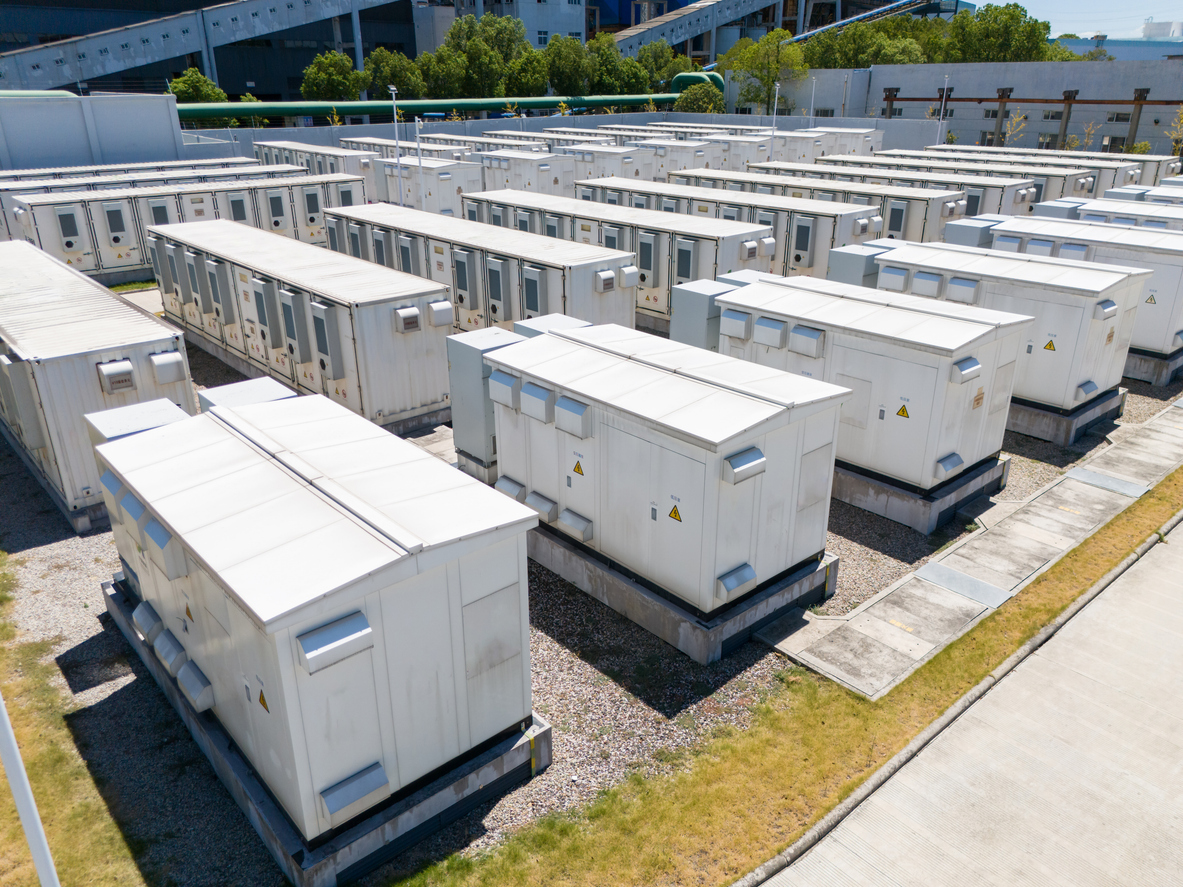
Battery energy storage systems (BESS) are increasingly routing power cables above ground to reduce trenching complexity and cost and to improve thermal performance. Electrical Contractor Magazine notes trenching between BESS units can be “too cumbersome” and above ground cables run cooler than buried cables.
When large power cables are routed on open ladder tray or exposed support systems, it’s important that they’re mechanically restrained to prevent damaging movement under short-circuit fault forces, especially with large, parallel conductors. NEC 392.20(C) reinforces this, stating that, “Single conductors shall be securely bound in circuit groups to prevent excessive movement due to fault-current magnetic forces unless single conductors are cabled together, such as triplexed assemblies”. Cable cleats are the engineered solution for that condition. IEC 61914 is the globally recognized standard that specifies requirements and tests for cable cleats used to secure cables in electrical installations.
BAND-IT® BAND-FAST® cable cleats are designed to make these types of installations easier: post-pull installation, low-profile fit for ladder tray, wide diameter adjustability to reduce SKUs, and IEC 61914 tested short-circuit performance, with published performance ratings and selection support tools.
Why BESS is changing cable routing (and why it matters to restraint)
1) The industry is pushing BESS cable management above ground
BESS sites are often container dense, schedule driven, and built in outdoor yards where civil work becomes a major cost and timeline variable. Electrical Contractor Magazine recently highlighted the best practice that BESS cable management “should be aboveground”, because trenching between units is cumbersome and costly, and that above-ground cables don’t heat up as much as buried cable.
This above-ground shift isn’t unique to storage. Similar logic is being applied in utility-scale solar; trenching can introduce practical risks (e.g., rock, water accumulation/mud, and other site conditions) and makes troubleshooting/repairs more disruptive, while above-grade routing improves accessibility. From a thermal standpoint, underground cable performance is strongly influenced by soil conditions. Dry, high-thermal-resistivity soil can trap heat around cables and reduce current-carrying capacity, reinforcing why many designers care about cooling and heat dissipation in routing choices.
Practical impact: When designers choose above-ground routing (ladder tray, cable ladders, structural supports, rail systems), the cables are no longer protected by a conduit enclosure. The containment becomes an open system, so proper restraint must be designed into the installation, not improvised later.
2) Higher-energy DC architectures make cable behavior more important
Modern BESS installations are trending toward higher DC voltages and large conductor counts (especially at the container-PCS/transformer interface), because that’s where most of the power flows and where small design inefficiencies compound. At the same time, because of the increasing pace of adoption, BESS safety scrutiny is rising as well. NFPA 855 continues to evolve around installation risk, and UL 9540A is the widely referenced test method for thermal runaway fire propagation behavior in BESS. An overview of UL 9540A testing and code context highlights how BESS safety considerations are treated as a layered system problem; installation codes, certification, and testing.
Why this matters for restraint: As projects tighten documentation, inspection, and hazard-mitigation expectations, owners and EPCs increasingly prefer solutions that are purpose-engineered, tested, and defensible.
It’s not just BESS: modular fuel-based generation is adopting the same above-ground feeder trend
The shift to above-ground power cable pathways isn’t limited to battery storage. As fuel-based distributed generation products become more modular and “factory finished,” they’re increasingly designed for faster site work using standardized, above-ground electrical interfaces, exactly the kind of routing environment where cable restraint becomes a deliberate design choice (not an afterthought).
Example: Joe Tavi from Bloom Energy has described this exact move. In explaining their Packaged Energy Server (PES) approach, Tavi highlights eliminating trenching/backfilling and notes that the packaged assembly’s above-ground cable trays can be connected to a substation by one tradesperson. This is a clear signal that tray-based feeder routing is part of the speed-to-power story for fuel cell generation, not only storage yards.
This broader “power block” pattern shows up across fuel-based, modular generation more generally. For example, OEMs selling modular natural-gas engine plants to data centers emphasize fast deployment and modular scalability, conditions that often result in open routing across a yard-like electrical backbone, where conductors must remain controlled under mechanical and fault conditions. Similarly, INNIO Jenbacher markets containerized generator set solutions as pre-installed packages intended for quick and easy site installation and reduced coordination, again reinforcing that “factory-built + standardized site interfaces” is a cross-category trend in generation.
Why this matters to restraint
When power cables move from buried conduit to open ladder tray or exposed supports, routing gets faster and more serviceable, but the cable system also becomes mechanically “alive.” That’s why the same above-ground feeder logic showing up in BESS (and now modular fuel-based systems) naturally brings the restraint conversation with it.
Why cleats are used when BESS goes above ground
The problem: short-circuit forces can turn cable movement into damage.
When a short-circuit occurs, fault current rises quickly and is interrupted quickly, but during that brief event, electromagnetic forces between large conductors can be severe. In open ladder tray routes, the tray supports the cable but does not enclose it; the cables can move. Industry guidance consistently emphasizes that circuit conductors must be grouped together and installed in a way that limits movement and maintains an effective fault path. That’s the specific job of a cable cleat; engineered restraint that holds cables in their intended formation and prevents violent movement during fault conditions.
Why this matters to restraint:
When power cables move from buried conduit into open ladder tray / exposed support systems, the routing is faster and more serviceable, but the cable system also becomes mechanically “alive.” In these open wiring methods, proper mechanical restraint is what ensures cables stay in formation and don’t experience damaging movement during fault events (the exact risk profile that drives cleat use in above-ground BESS). In other words, the same “above-ground feeder” logic that accelerates BESS construction is also shaping how modular fuel-based generation products get installed, so the cable restraint conversation travels with it.
The standard behind the conversation: IEC 61914
IEC 61914 is the global benchmark standard for cable cleats. It specifies requirements and tests for cable cleats used for securing cables in electrical installations and for holding cables together in formation, including resistance to electromechanical forces where declared. This is important because it lets specifiers compare cleats on something more meaningful than appearance or hardware count, it provides declared performance that maps to recognized test requirements.
Why this is especially relevant for data centers adopting BESS
Data centers are increasingly evaluating BESS not just as grid support, but as part of campus resiliency architecture. A notable example is the FlexGen + Rosendin effort to develop a utility-scale BESS system designed to function as a UPS alternative outside the data center building, tied into medium-voltage infrastructure. Data Center Frontier frames this shift as potentially transformative because it changes how resiliency is delivered across the campus, moving battery infrastructure into a utility-grade outdoor system rather than inside traditional UPS rooms. If resiliency and power quality are pushed outside the building, the electrical backbone becomes more like a power yard, with open routing, high energy, high fault potential, and fast deployment expectations. Those are the conditions where cable cleats become a critical item, not a “nice-to-have”.
Where cleats show up in BESS installations (across the board)
Cable cleats are most commonly specified on open wiring methods where high-energy cables are exposed;
- Container / battery block PCS / inverter interface (dense parallel conductors; high fault energy potential)
- PCS / inverter transformer interface (equipment-to-equipment backbone routing)
- Medium-voltage collection routes on ladder tray (open tray routes across a yard)
- Outdoor cable ladder runs on supports/rails (where cable spacing and formation must remain stable)
In tray or ladder installations, cleats are the restraint element, the component that ensures the cable system behaves predictably under fault conditions.
Why BAND-IT cable cleats are a strong fit for BESS (and BESS-as-UPS)
BESS sites reward products that reduce install friction, reduce SKU complexity, and provide defensible performance.
1) Designed for short-circuit restraint (and documented)
BAND-IT cable cleats are designed for short-circuit protection in critical power systems and certified to IEC 61914 for mechanical restraint performance.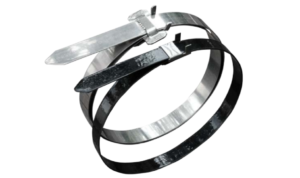
2) Faster, simpler installation where schedules are tight
BAND-FAST® cable cleats are designed for post-pull installation (install after cables are in place), reducing pre-staging and rework in dense tray environments.
3) Low-profile fit that works with ladder tray constraints
A low-profile design and the ability to install directly to ladder tray without extra brackets (application dependent), helps preserve tray capacity and simplify field work.
4) SKU reduction through wide diameter adjustability
BESS projects routinely face last-minute cable OD changes due to availability, conductor optimization, or thermal design adjustments. BAND-IT cable cleats offer wide diameter adjustment as a way to reduce part numbers and simplify inventory planning.
5) Built for harsh outdoor environments common in utility-scale storage
BAND-FAST® offers corrosion-resistant 316 stainless steel (coated and uncoated) construction and materials selected for long-term durability in harsh environments and minimal wear on cable sheathing.
In BESS and data-center BESS deployments, the cost of cable movement during a fault is not “cosmetic.” It’s terminations, downtime, and safety exposure. BAND-IT cleats are designed to reduce that risk with fewer components and easier install workflows.
Selection guidance: what information you need to specify a cleat correctly
To select a cable cleat solution, specifiers typically need:
- Peak prospective fault current (kA) for the route
- Cable OD and formation (single, trefoil, etc.)
- Support geometry (ladder rung spacing / tray layout)
- Cleat spacing target (e.g., 300 mm / 600 mm or project-specific)
BAND-IT provides a cable cleat calculator that connects configuration, spacing, kA rating, and cable diameter to a recommended solution aligned with IEC 61914. Use the calculator to generate a first-pass recommendation, then validate final specification through qualified engineering review and your BAND-IT representative.
Recommended next steps
If you’re engineering or building a BESS (especially one supporting a data center campus) start by identifying your highest-energy open routing paths, such as container-to-PCS, PCS-to-transformer, and MV collection routes. These are typically where restraint decisions have the greatest impact.
From there, a straightforward workflow helps keep cable behavior predictable and defensible:
- Determine prospective fault levels and cable formations for each route, focusing on parallel conductors on open tray or ladder systems.
- Select a cleat approach aligned with recognized IEC 61914 performance expectations, so restraint capability is tied to documented test criteria rather than assumptions.
- Use BAND-IT’s cable cleat calculator to quickly narrow cleat type, spacing, and part numbers for the application.
- Confirm the final design through qualified engineering review and project-specific requirements before release for construction.
Designing a BESS cable route? Plan restraint deliberately, not as an afterthought.
When high-energy power cables move during a fault, the consequences are immediate; damaged equipment, extended downtime, and avoidable risk. BAND-IT® BAND-FAST® cable cleats are engineered specifically for short-circuit restraint, optimized for dense tray and ladder installations, and supported by selection tools. The result is a restraint solution that helps teams specify faster, install faster, and reduce rework risk, without adding unnecessary complexity to the build.
Engineered restraint. Predictable performance. Built for the realities of modern BESS and data-center power infrastructure.
FAQs
Are cable cleats required in BESS?
Engineered restraint is commonly considered best practice when high-energy cables are installed on open tray or ladder routes, as is common in non-trenched scenarios. Industry code guidance reflects this by emphasizing secure grouping of conductors to manage movement under fault conditions.
Why not just use cable ties?
Cable ties can organize cables, but they are typically not selected or documented as engineered short-circuit restraint hardware. In high-energy DC environments, stakeholders prefer tested, purpose-built restraint aligned to recognized standards (e.g., IEC 61914).
Does this apply outside the U.S.?
Yes. The underlying physics and the IEC 61914 standard are global. The U.S. is highlighted because adoption pressure is high in utility-scale BESS and in emerging data-center BESS-as-UPS architectures that move power infrastructure outdoors.
Are cleats used in data centers too?
Yes. Data centers use cleats on ladder tray routes carrying large LV and MV conductors along high-energy backbone paths—especially in gray space. BAND-IT has a dedicated overview of where cleats appear in data centers and why; Where Are Cable Cleats Used in Data Centers?