
Hose Assembly Engineering & Tooling

Fastening Systems Built for Performance and Production

In OEM manufacturing, hydraulic and fluid hose assemblies are more than flexible connections – they are high-pressure systems that must remain secure under constant stress. A failure at a connection point can cause leaks, downtime and serious safety risks. A hose fastening system’s engineering plays a critical role in equipment performance.

The clamp system used on a hose assembly directly affects its reliability. A poor clamp design or an inconsistent installation can lead to early wear, leaks or complete failure. That’s why manufacturers depend on preformed clamps and verified banding tools that can deliver secure, repeatable installations on the production line and in the field.

Tooling is just as important as the clamp itself. A banding tool used with preformed clamps must apply consistent tension and a proper cut-off every time. This ensures performance across high volumes and multiple operators. Whether using a manual banding tool or a pneumatic tool, the right equipment helps reduce installation variation and supports faster cycle times.

BAND-IT’s complete hose assembly solutions include preformed clamps and tooling systems designed to meet the unique needs of OEM production and service environments. From heavy equipment to energy infrastructure, BAND-IT fastening products are engineered to stay in place, even under vibration, pressure and exposure to corrosive elements.

Engineering Challenges in Hose Assemblies

Designing and assembling a hose system for heavy-duty equipment comes with several engineering challenges. Most hose assemblies are subject to constant movement, exposure to heat and environmental contaminants. Over time, these conditions can cause failure at clamp points, unless the fastening system is designed to handle the load.

Common failure modes include:

  • Vibration fatigue that loosens clamps and causes leaks
  • Abrasion at contact points where loose sleeves or improperly installed clamps rub against nearby components
  • Thermal cycling that causes expansion and contraction, weakening crimped or rigid connections over time

Clamp choice plays a major role in how well the hose assembly performs under stress. Worm gear clamps often loosen due to thread stretch or thermal movement. T-bolt clamps can be difficult to install with consistent torque and often introduce bulky profiles that interfere with other components. Crimped fittings, while strong, require tight process control and specialized tooling that may not be ideal for every production line or field repair scenario.

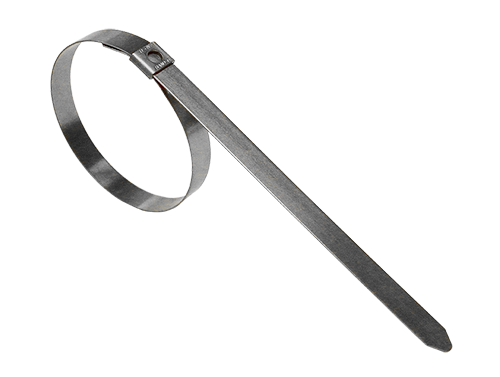
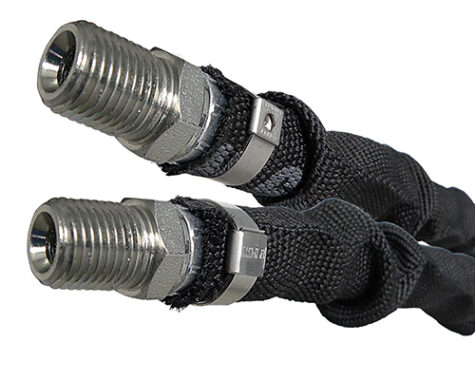
BAND-IT’s preformed clamps address these challenges by providing even tension around the full circumference of the hose or protective sleeve. Combined with the right tool, installers can achieve reliable tension every time, without over-compressing or damaging the hose material.

For OEMs, these engineering advantages translate to fewer warranty claims, longer service intervals and more consistent installation quality across shifts or assembly lines.

Benefits of Stainless Steel Clamping Systems

Stainless steel clamping systems are widely used across hose assembly applications for one primary reason: they work. Designed for durability, consistency and adaptability, these systems solve many of the challenges faced by OEMs during both production and field service.

One of the key advantages is the ability to cover a wide range of diameters with fewer clamp styles. Unlike fixed-size clamps that require multiple part numbers to accommodate different hose sizes, stainless steel clamping bands and band straps are available in a broad selection of diameter ranges. This allows engineers and sourcing teams to standardize on fewer clamp types while still meeting application requirements, simplifying inventory management and reducing SKU counts.

The low-profile design of stainless steel clamps also makes them ideal for confined engine compartments and other tight spaces. Bulky clamp housings can interfere with nearby components, introduce snag points or require additional clearance. BAND-IT stainless steel clamps sit flush against the hose or sleeve, minimizing interference and supporting safer, cleaner routing.

Performance under stress is another area where stainless steel clamps excel. These systems are built to resist constant vibration, temperature swings, UV exposure and chemical corrosion. Plastic ties and mild steel alternatives often degrade quickly under the same conditions, leading to system failures and increased maintenance needs.

BAND-IT stainless steel clamps are used across industries, including construction, agriculture, energy and marine. Whether securing a hydraulic sleeve or holding an assembly to a vibrating frame, they maintain tension and position without loosening or damaging the hose.

For OEMs seeking reliable, consistent fastening, stainless steel clamps provide a strong, repeatable solution that reduces complexity and performs over time.
The Role of Tooling in Installation Success

A clamp’s long-term performance depends not only on its material or shape but also on how it is installed. BAND-IT tools are designed to help OEMs achieve consistent, high-quality installs while reducing strain on operators and supporting fast-paced production environments.

Ergonomics play a key role on the production floor. Whether a team is using a manual tool or a pneumatic model, BAND-IT designs its equipment for comfort and control. Reducing operator fatigue over long shifts supports both safety and productivity.

Consistent installation is essential for avoiding clamp-related failures in the field. BAND-IT tools deliver repeatable results that reduce variability between operators or across production lines.

Key tooling benefits include:

  • Uniform tensioning: BAND-IT tools apply even force to each clamp, which helps prevent both under-tightening and over-tightening.
  • Clean shearing: Each tool is engineered to deliver a precise cut without damaging the band or the underlying hose.
  • Adjustable pull strength: Operators can adjust tension settings to suit different hose sizes, sleeve materials or clamping requirements.
  • Ease of use: Designed with simplicity in mind, BAND-IT tools require minimal training to use correctly and efficiently.

Consistency at the clamp point helps protect hoses from abrasion, vibration and pressure spikes, reducing the chance of early failure. These features also support faster installs, better quality control and fewer warranty claims.

Whether used in a high-volume assembly line or in field service, BAND-IT’s tools give OEMs the control needed to meet installation standards and long-term durability goals.

To see these tools in action, view installation tips and demos in the BAND-IT Tool & Installation Video Library.

Testing, Validation and OEM Standards

OEMs rely on consistent and validated components for their hose assemblies, particularly when those assemblies are exposed to vibration, pressure and environmental stress. BAND-IT stainless steel clamp systems and tools are built to meet these expectations through extensive internal testing and compliance with global quality standards.

BAND-IT operates under the ISO 9001 quality management system and is also certified to IATF 16949, the global standard for automotive production. These certifications are important for OEMs because they confirm that the design, manufacturing and quality control processes meet strict requirements. This helps sourcing and engineering teams select components that support long-term product reliability and audit-readiness.

In addition to certification, BAND-IT clamps and fastening systems are tested under application-specific conditions to verify performance in real-world use. These tests ensure that hose assemblies stay secure over time and under stress.

Key testing includes:

  • Pull-off strength: Verifies that clamps stay in place under axial loading. This is essential for high-pressure hydraulic hose systems that experience dynamic force during operation.
  • Salt spray testing: Confirms corrosion resistance of stainless steel clamps when exposed to moisture, salt and other corrosive agents commonly found in industrial and outdoor environments.
  • Vibration fatigue testing: Assesses clamp performance under prolonged exposure to shock and movement, replicating conditions found on construction equipment, marine platforms and mobile machinery.

These validation processes ensure that BAND-IT clamps and tools provide consistent performance, reduce failure rates and support OEMs in meeting internal standards, as well as regulatory and safety requirements. This testing is part of what allows BAND-IT products to be used confidently across critical applications where reliable hose assembly fastening is essential.

For documentation or detailed specifications, refer to the Product Solutions Guide.

Why Tooling and Engineering Matter in Hose Assembly

In hose assembly systems, failure often happens at the connection point. The strength of the connection depends not just on the clamp, but on the entire approach – from engineering design to installation and long-term performance. BAND-IT stainless steel clamps and tooling systems are built to address the full equation.

For OEMs, this means fewer part numbers, faster assembly and better consistency across production shifts. It also means higher confidence in every hose connection leaving the factory floor. With global quality certifications, repeatable tool performance and proven durability in the field, BAND-IT supports equipment builders in meeting both operational demands and safety standards.

From vibration resistance to corrosion protection, BAND-IT stainless steel clamping systems are built for industrial performance. Paired with reliable banding tools and engineering support, these solutions help keep equipment running and connections secure.

For applications with unique engineering needs, contact BAND-IT to discuss custom fastening solutions.