Common Fastening Methods and Their Limitations
In hydraulic hose sleeving applications, the method used to secure the sleeve can directly impact performance, safety and service life. While several fastening options exist, many introduce risks that compromise system reliability.
Common methods and their limitations include:
- Worm gear clamps – Often loosen under vibration and temperature changes. Their housings and exposed slots can cut into sleeves or hoses, increasing the chance of damage over time.
- Zip ties – Easy to install, but not built for industrial use. They degrade in UV, snap in cold temperatures and weaken when exposed to oil or heat, often leading to early failure.
- T-bolt clamps – Provide high clamping force, but lack flexibility. They are bulky, harder to position and require precise torque to avoid over-tightening or crushing components.
- Pinch-ear clamps – Depend heavily on tool accuracy. Inconsistent compression or over-squeezing can result in sleeve damage, loose fits or callbacks due to improper installations.
- Crimping – Requires specialized equipment and precise control. High variation between installs is common, especially in the field, leading to reduced consistency and reliability.
- “No clamp” slip-on sleeves – In some cases, sleeves are pushed over the hose with no attachment. This increases the risk of the sleeve shifting, bunching or detaching completely under pressure or repeated shock.
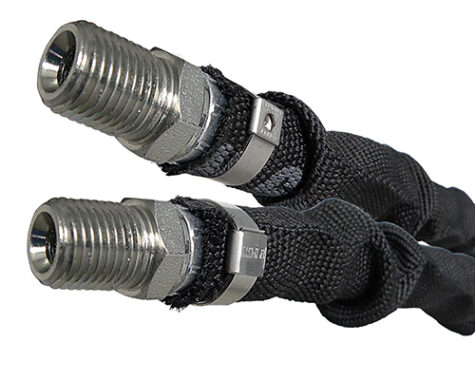
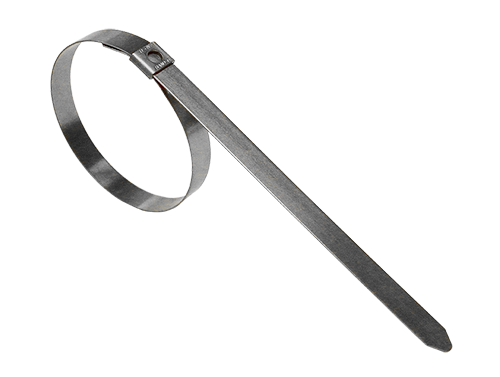
BAND-IT stainless steel fastening systems outperform other methods by delivering uniform clamping pressure along the point of application, which helps prevent leaks, slippage and detachment. Unlike alternatives, these clamps are engineered to resist vibration, weathering and corrosion, making them a top choice for harsh-duty environments.
Installation tools are designed for consistency and ease of use, helping operators apply the correct tension every time while reducing fatigue and error. The low-profile design of BAND-IT clamps also minimizes snag points and allows them to fit easily within tight spaces or layered hose configurations.